
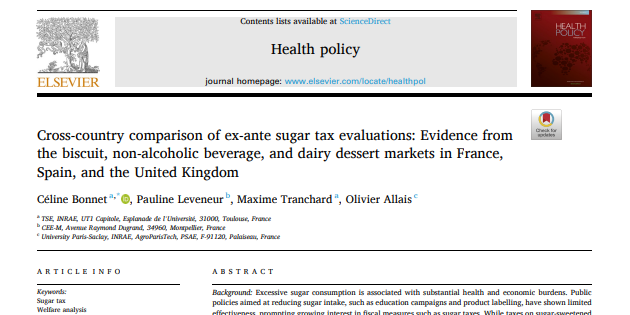
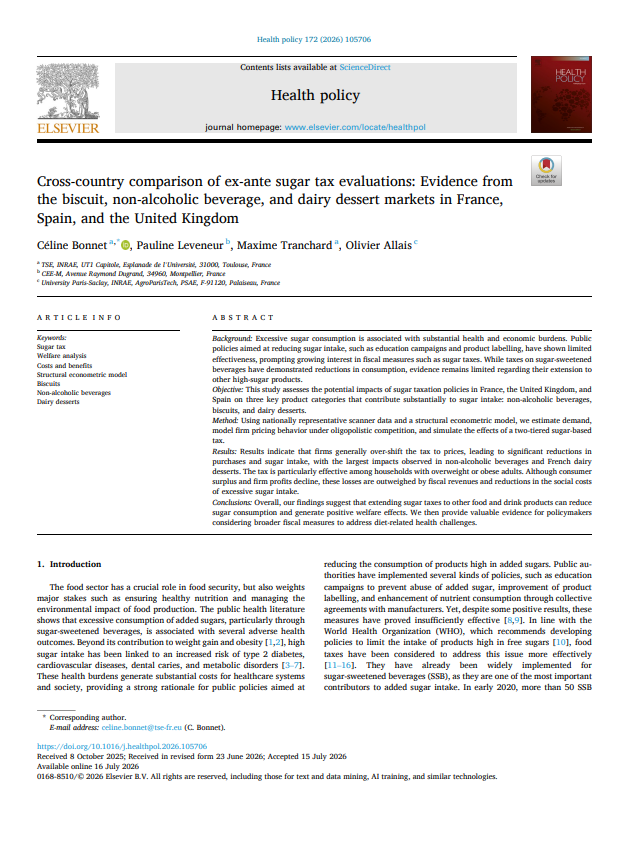
On July 16, 2026, the DynAPol-3P project published an article titled “Cross-country comparison of ex-ante sugar tax evaluations: Evidence from the biscuit, non-alcoholic beverage, and dairy dessert markets in France, Spain, and the United Kingdom” in Health Policy.
Excessive sugar consumption contributes to weight gain and obesity but is also associated with an increased risk of type 2 diabetes, cardiovascular disease, tooth decay, and metabolic disorders. Public policies aimed at reducing sugar consumption through fiscal measures, such as taxes on sugary beverages, have been effective in reducing consumption.
In this study, the authors examined the potential impact of sugar taxation policies in France, the United Kingdom, and Spain when extended to three key product categories that contribute substantially to sugar intake: non-alcoholic beverages, cookies, and dairy desserts.
Their findings show that taxes, when passed on to prices, lead to a significant decline in sugar purchases and consumption, with particularly pronounced effects on the non-alcoholic beverage market as well as the dairy dessert market in France. The tax is particularly effective among households with overweight or obese adults.
Extending sugar taxes to other products could therefore reduce sugar consumption and have positive effects on public health.
Although this tax represents a cost for consumers and businesses, it is more than offset by the tax revenue generated and by the reduction in societal costs associated with excessive sugar consumption.
- Céline Bonnet, Toulouse School of Economics – INRAE
- Pauline Leveneur, Center for Environmental Economics – Montpellier
- Maxime Tranchard, Toulouse School of Economics – INRAE
- Olivier Allais, University Paris-Saclay, INRAE, AgroParisTech, PSAE