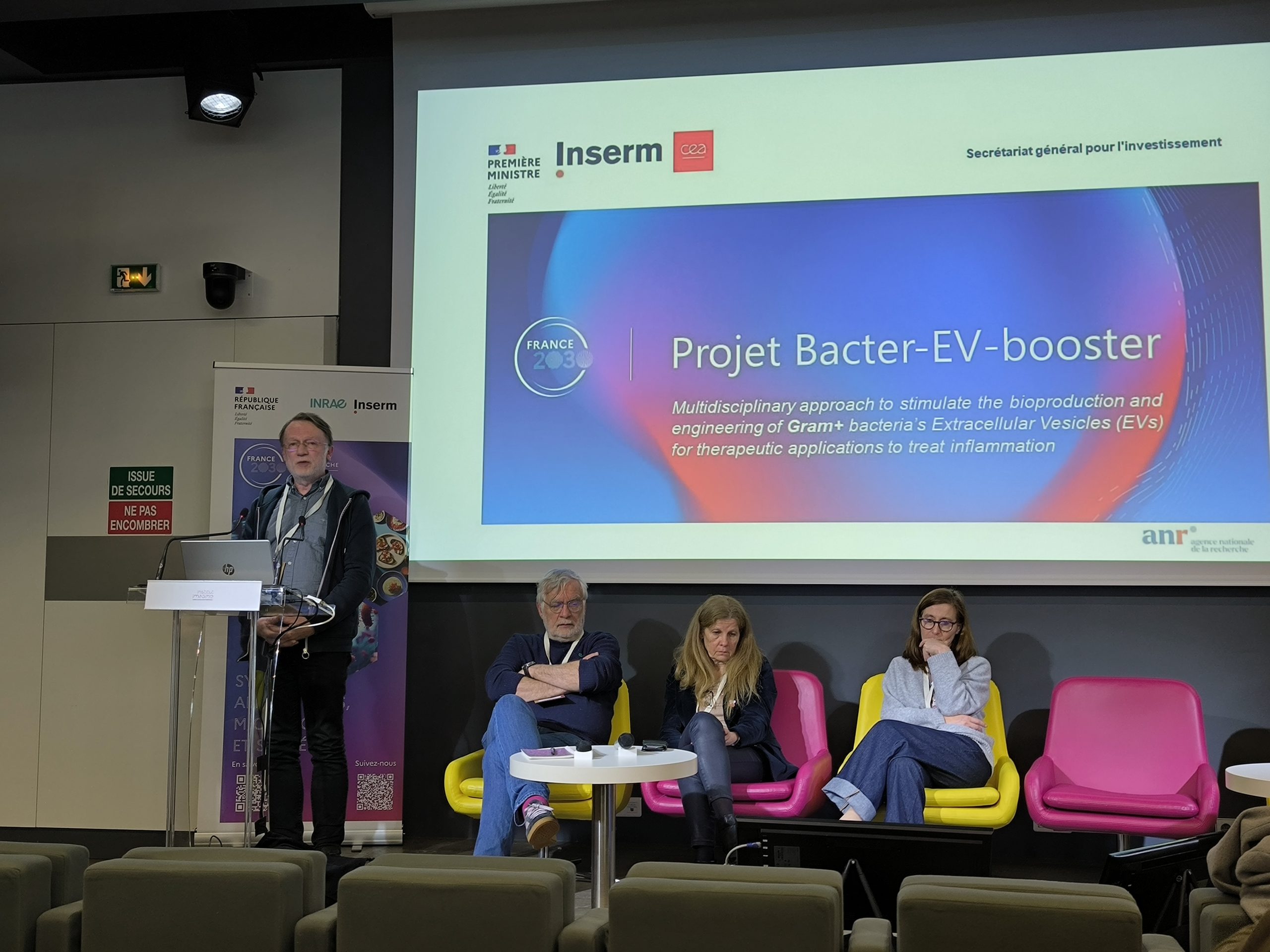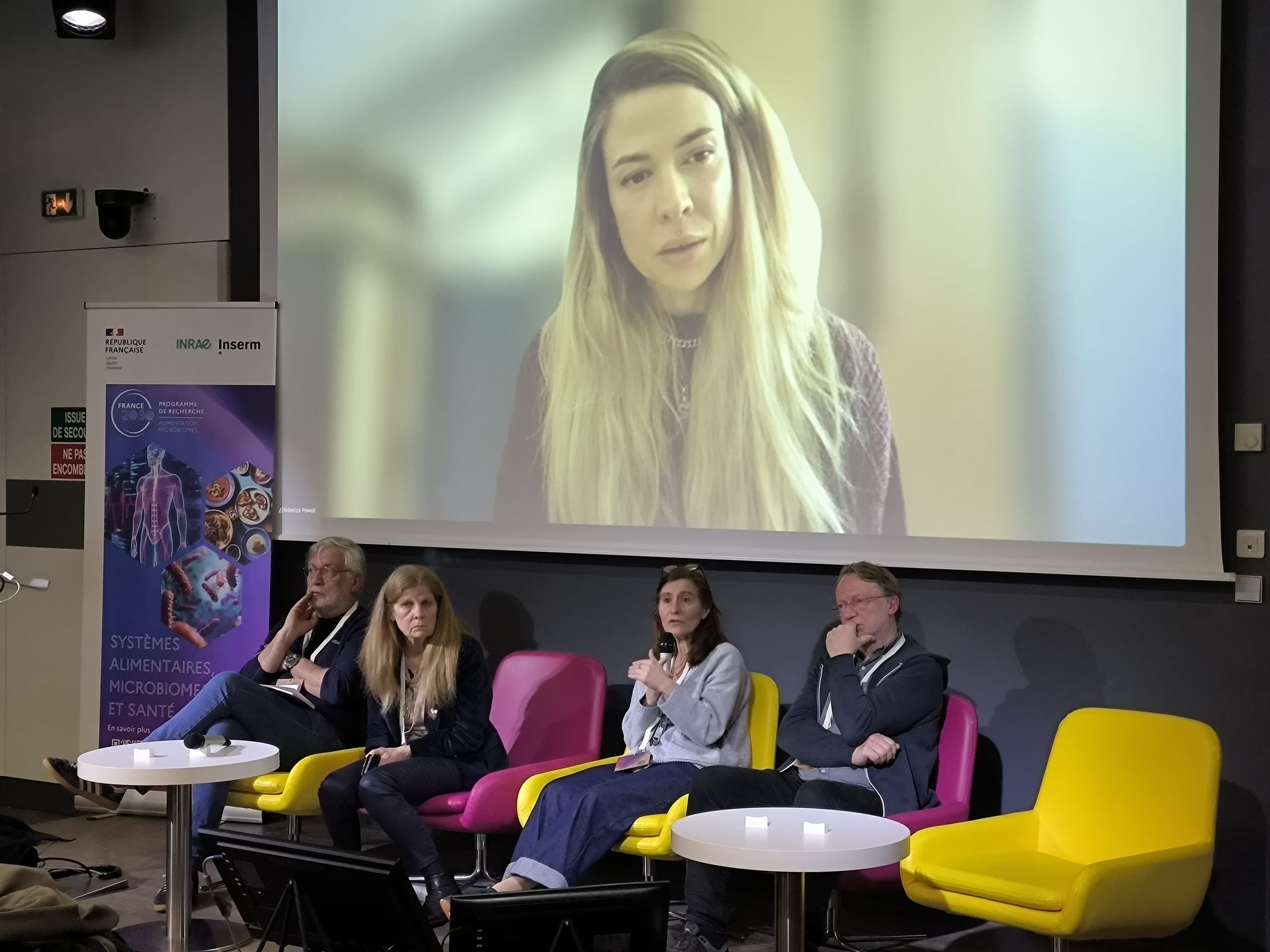
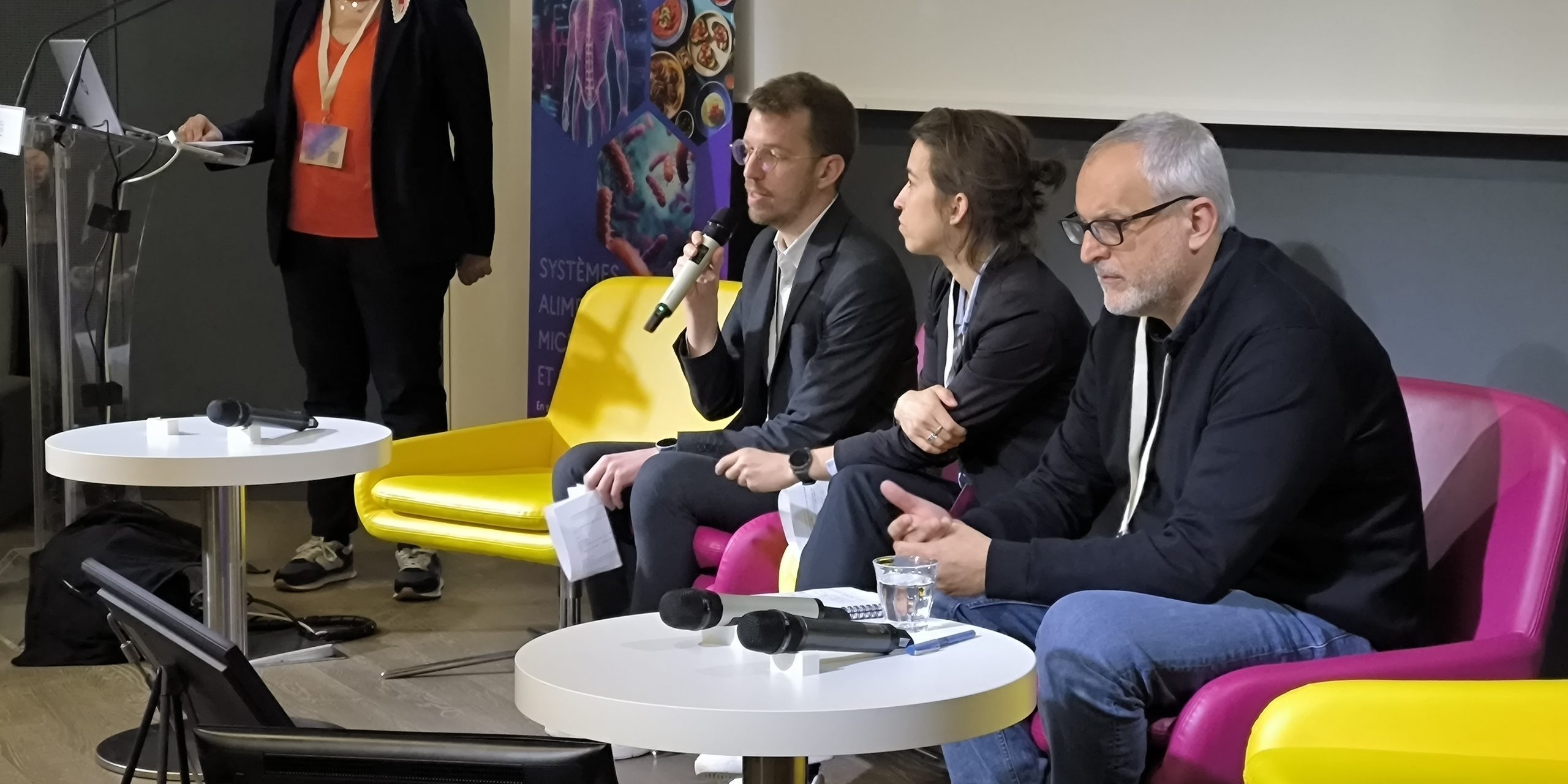
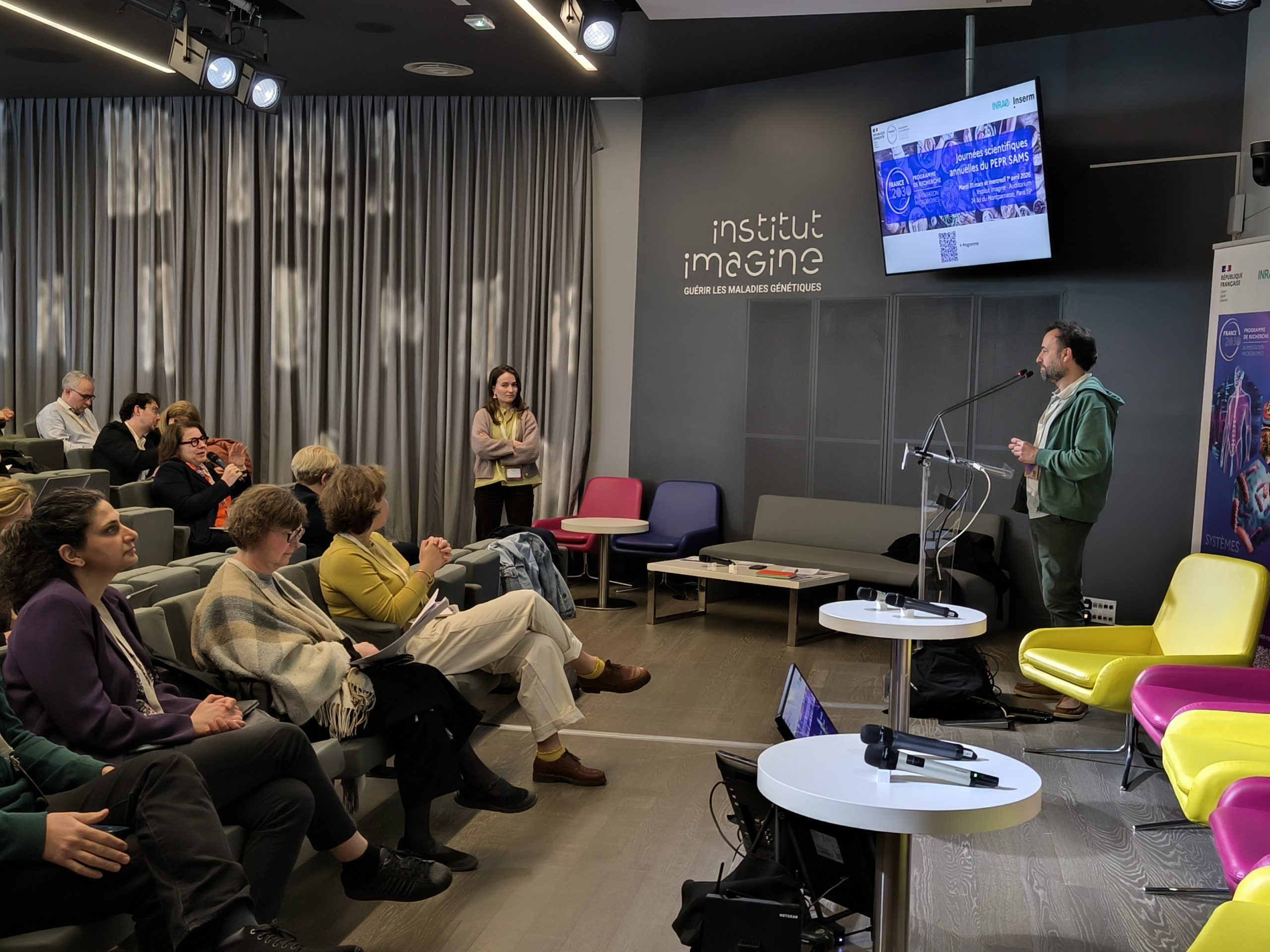
The annual scientific days of the France 2030 Food Systems, Microbiomes, and Health research program (PEPR SAMS) were held on March 31 and April 1, 2026.
Here is a look back at this key event in the consolidation of research communities focused on food systems, microbiomes, and health.
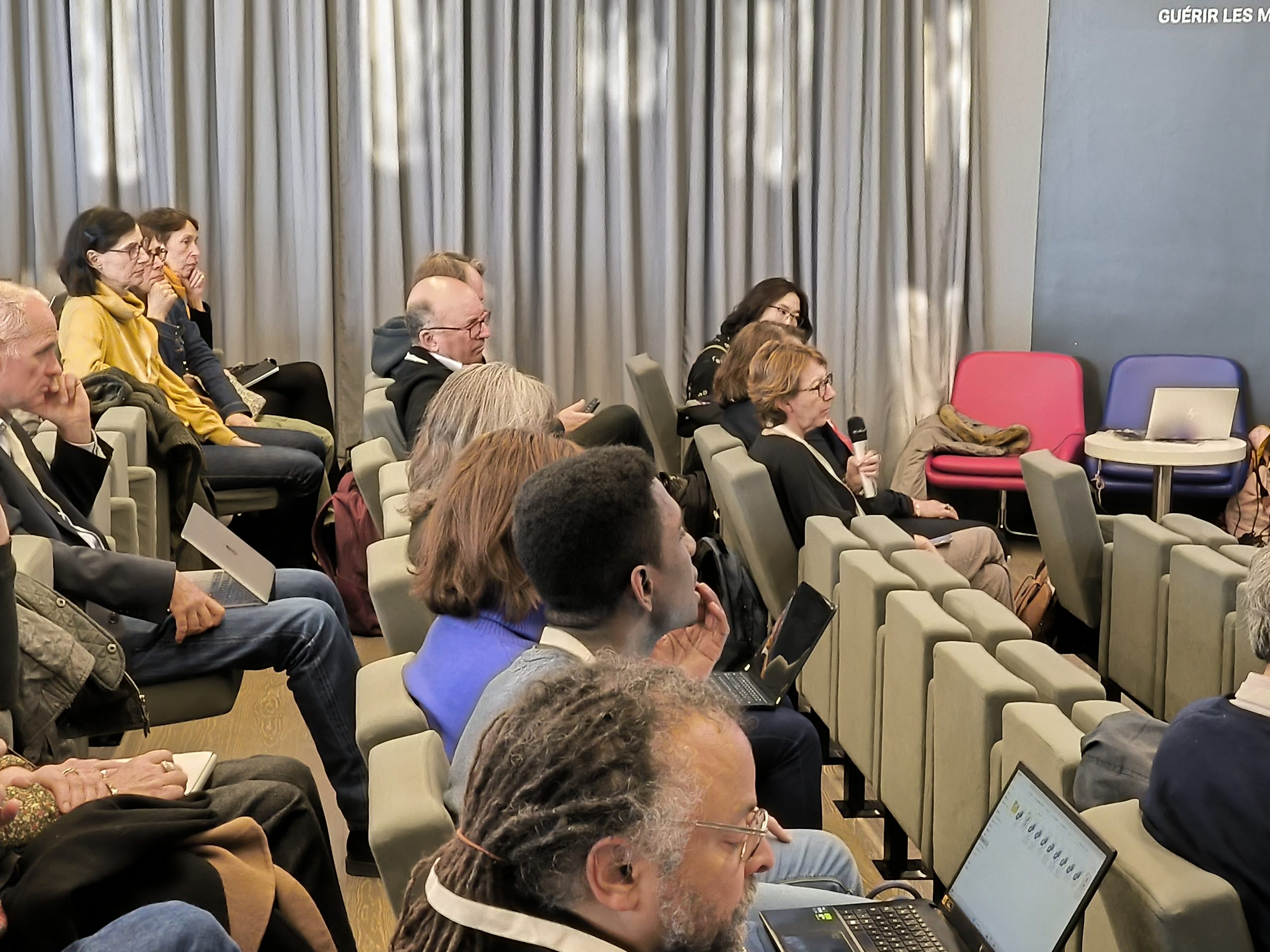
The purpose of these days was to bring together those involved in the program and those interested in joining it. They were designed to facilitate discussions about new projects supported by the research program and the progress of projects already underway. The event also aimed to discuss various topics of interest to the broader research community, such as AI, data management, public policy support, and participatory research.
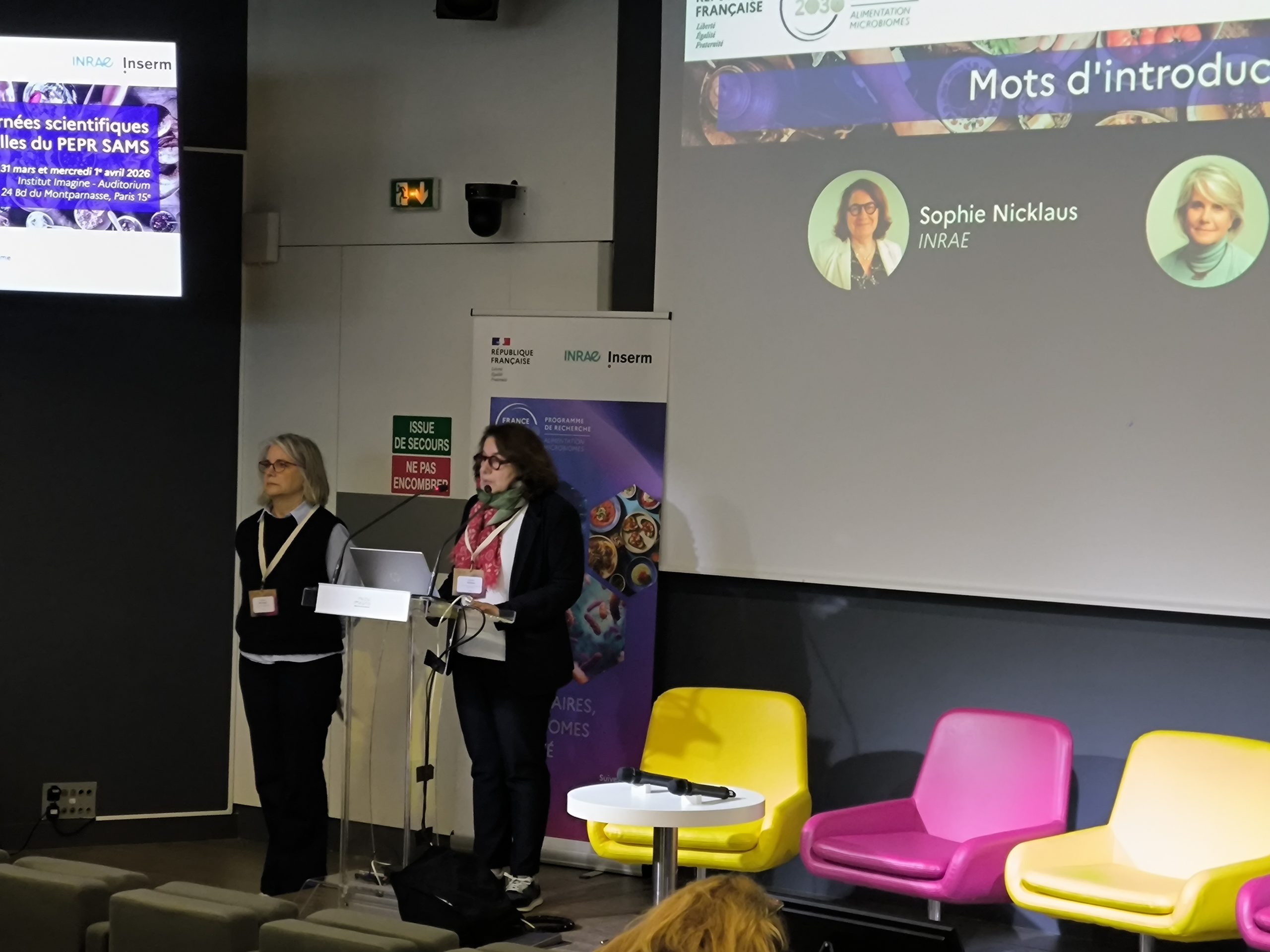
At the start of the first day, Sophie Nicklaus, Scientific Director of Food and Health at INRAE, and Chantal Boulanger, Director of Inserm’s “Physiopathology, Metabolism, and Nutrition” Thematic Institute, offered a few words of welcome.
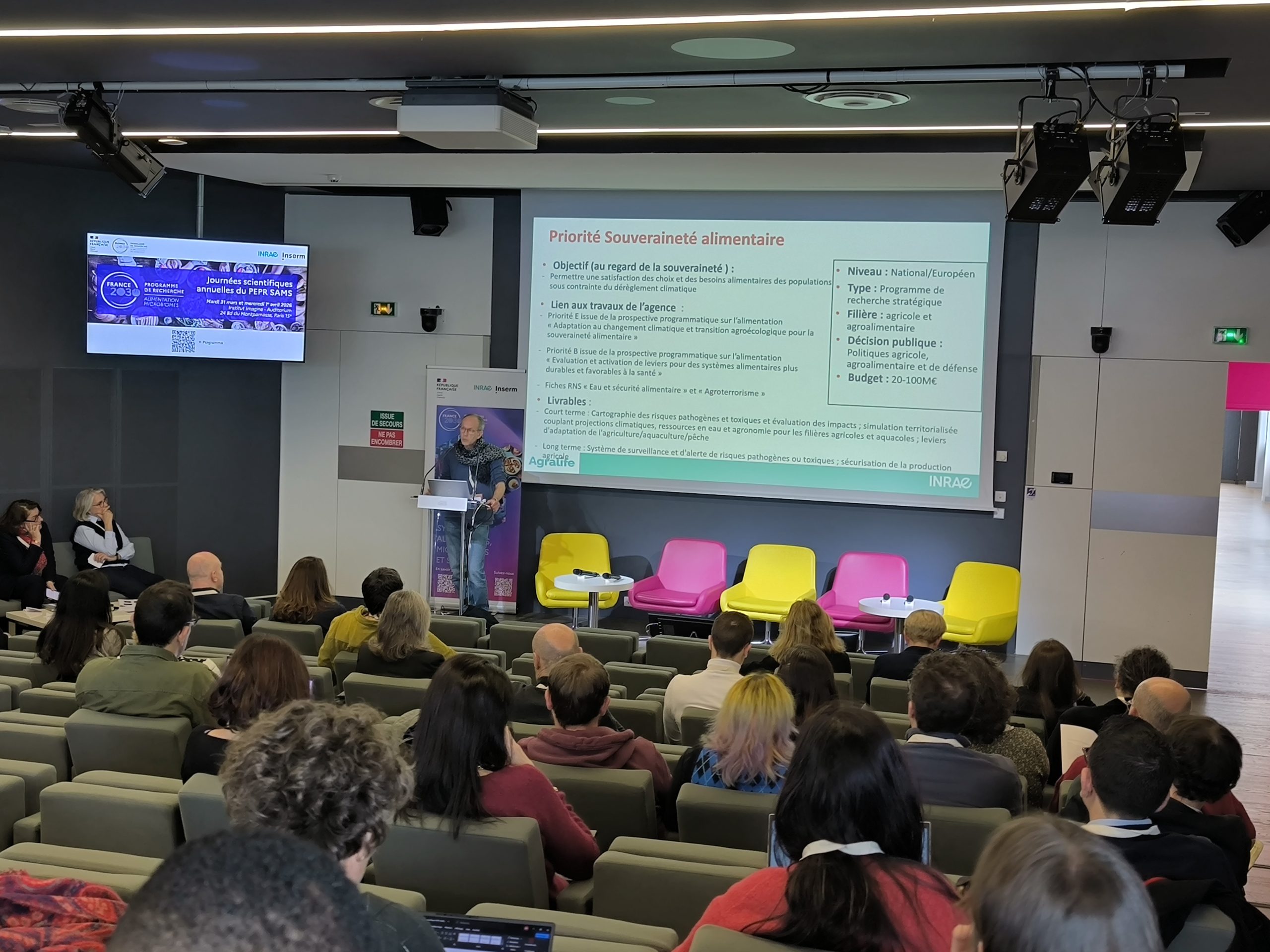
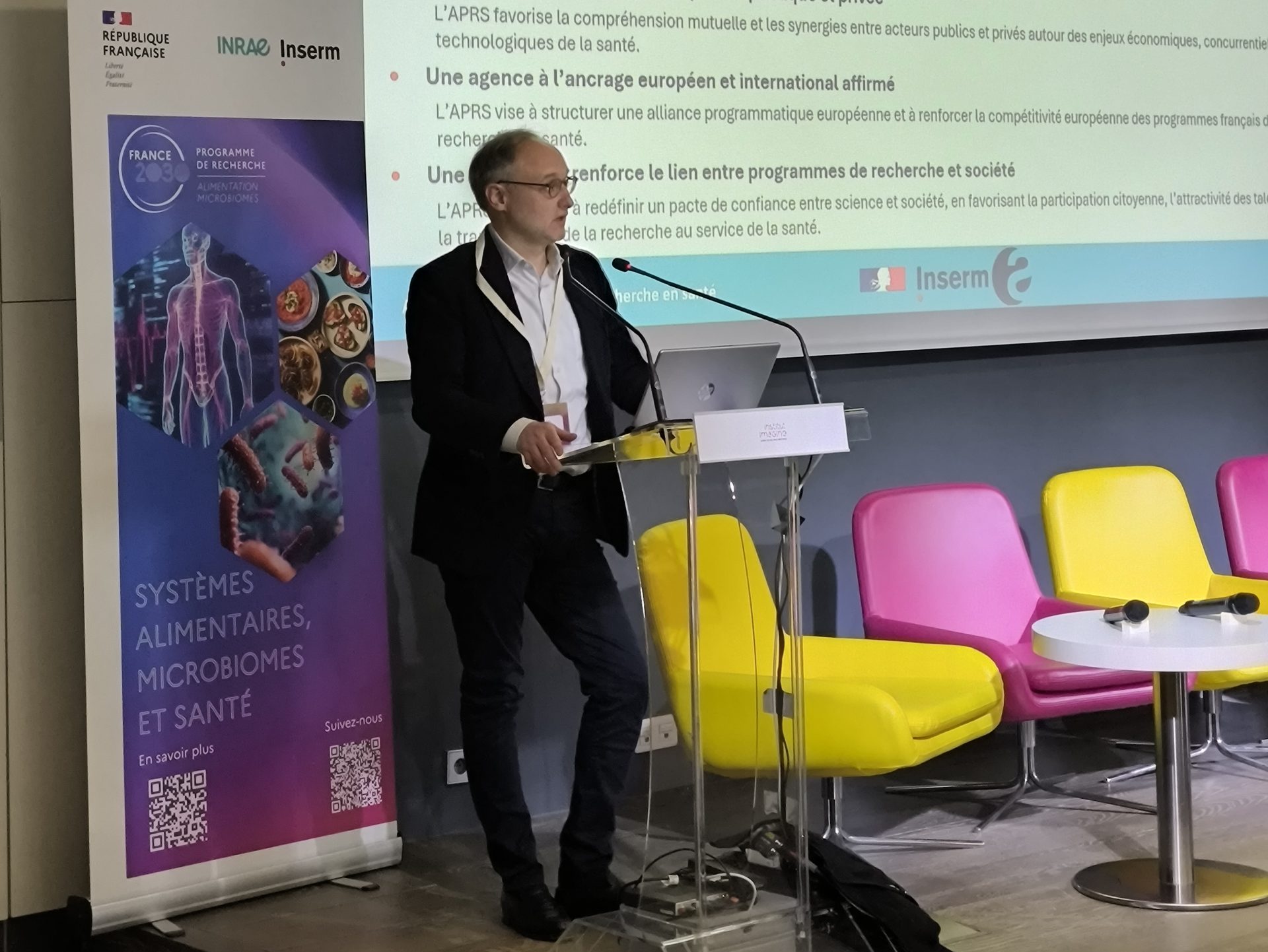
These were followed by remarks from Thierry Doré, Executive Director of the Agralife agency, and Franck Mouthon, Executive Director of the Agency for Health Research Programs (APRS). Together, they presented the progress and latest developments from these program agencies in relation to the PEPR SAMS.
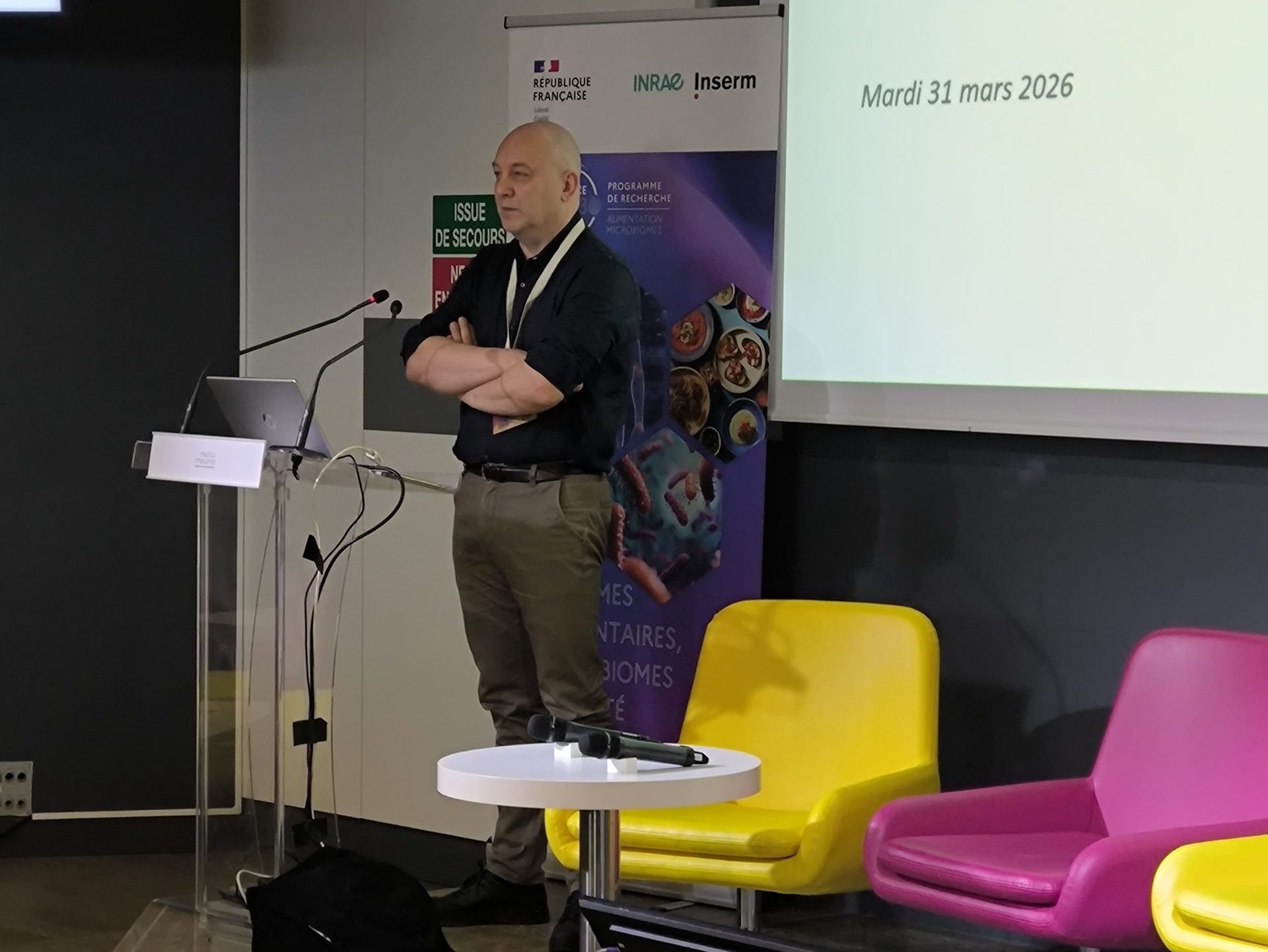
Patrick Eparvier, Head of the Studies and Evaluations Division within the ANR’s Major State Investment Programs Directorate, then explained how the impact of the France 2030 programs is measured, focusing in particular on the results of studies conducted in 2025 and the insights gained regarding the thematic profile of the PEPR SAMS.
Finally, the directors of the PEPR SAMS, Sandrine Henri, Evelyne Jouvin-Marche, Emmanuelle Maguin, and Sophie Nicklaus, presented the program’s progress since last year.
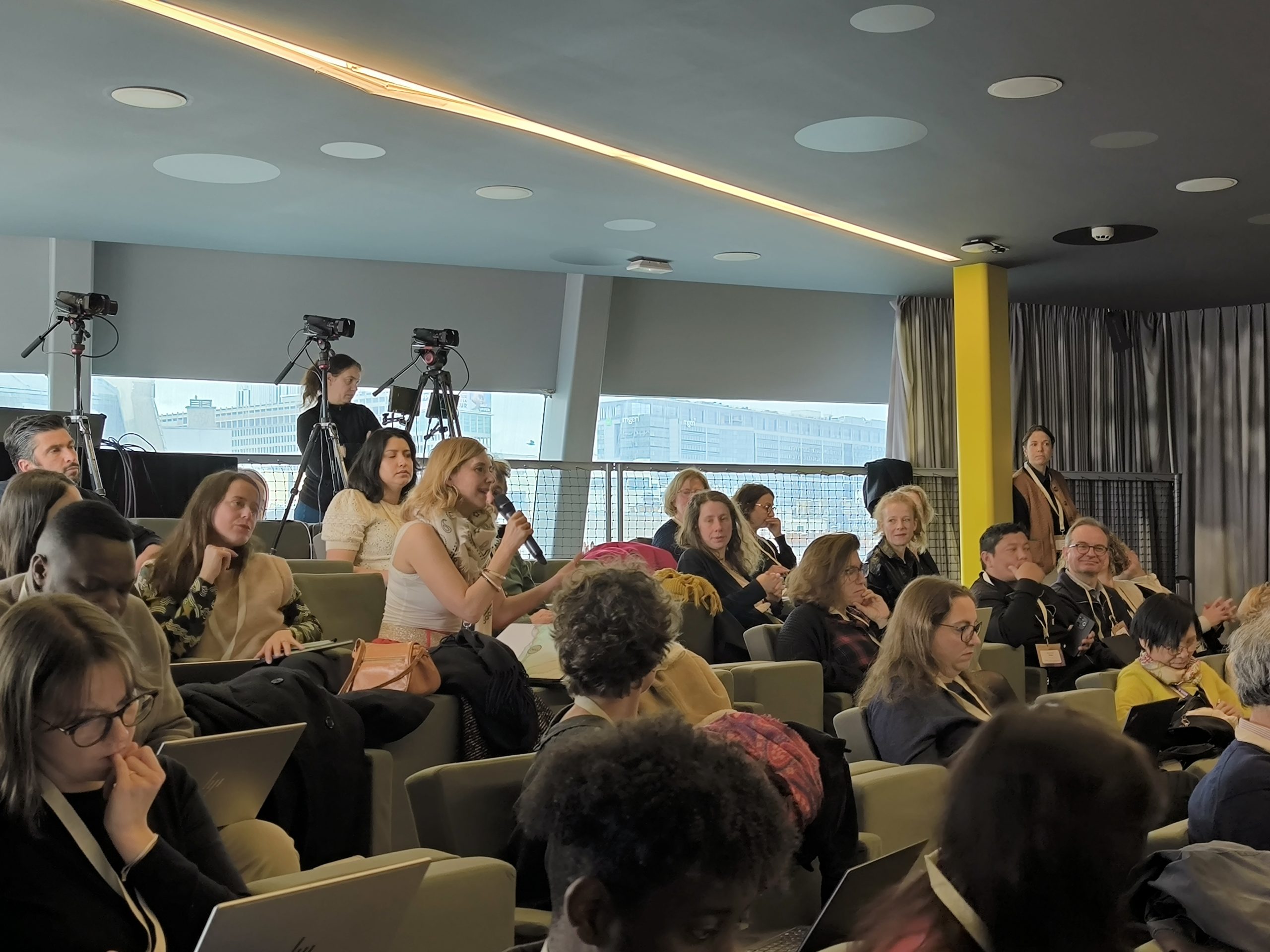
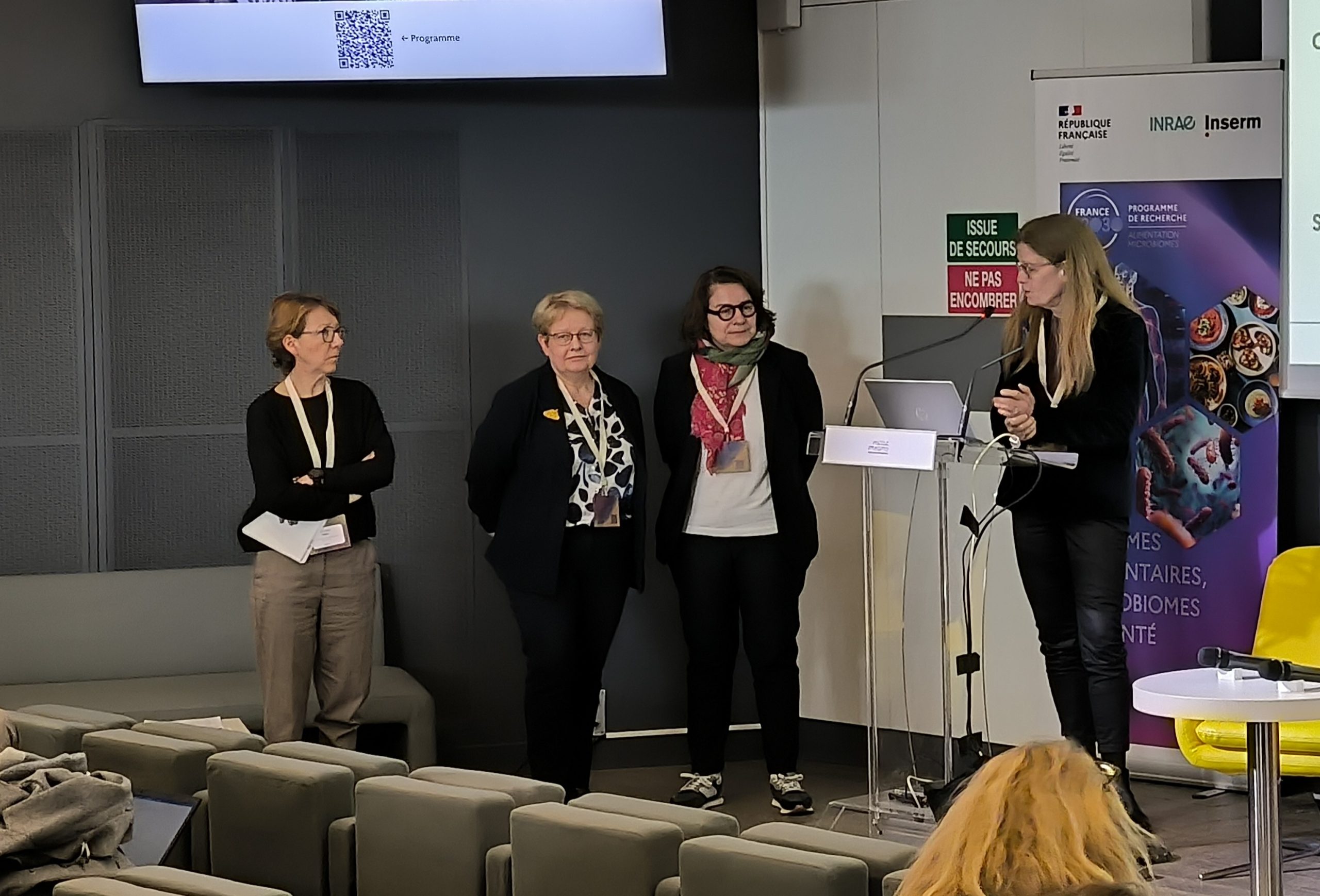
These days highlighted the key achievements of SAMS projects. The first “Highlights” session featured:
- New matching tools soon to be available via open access through the INTERFOOD project, presented by Mathilde Touvier, Julie Gauvreau-Béziat, and Juliette Defossez
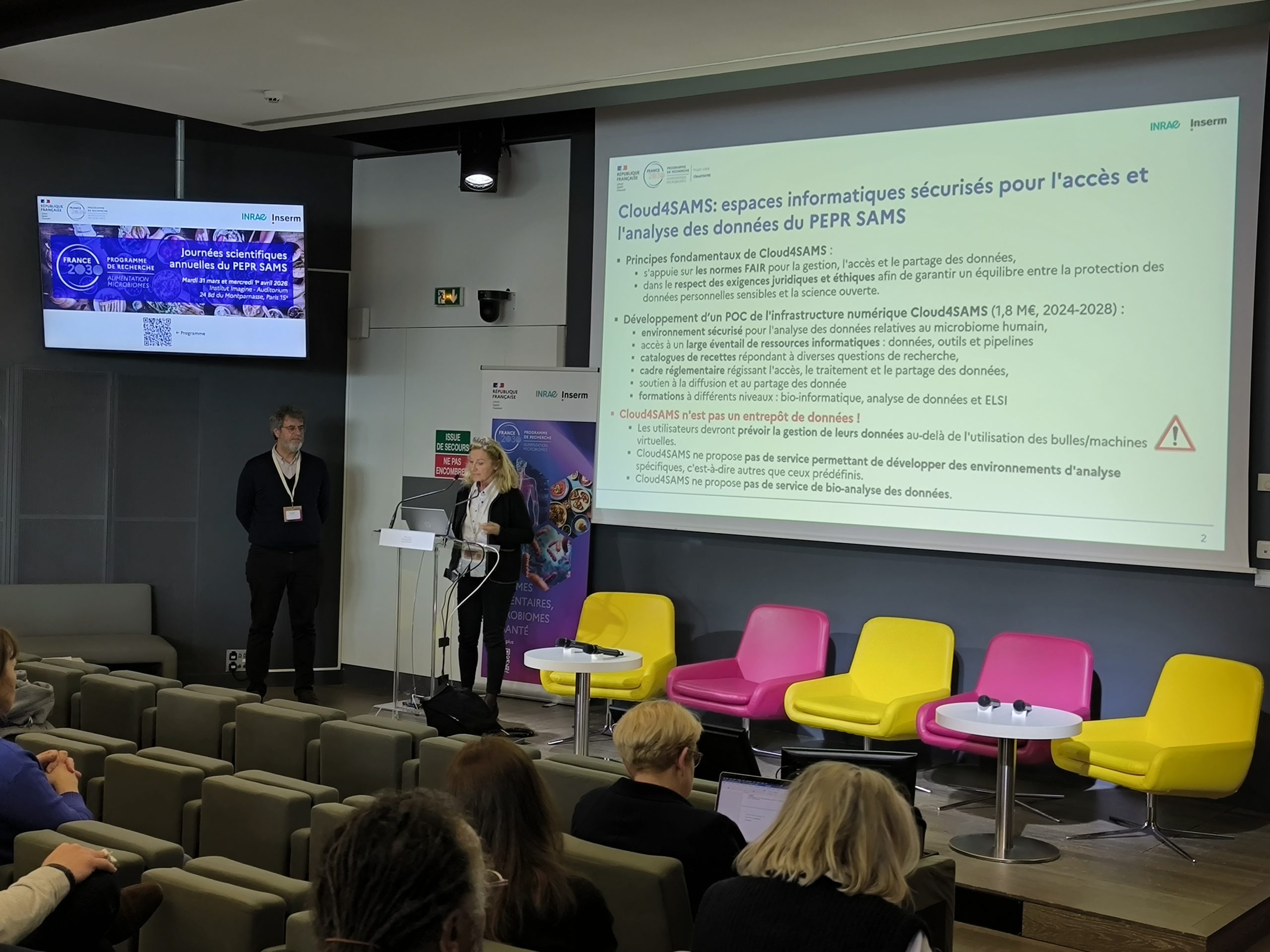
- The first environments for analyzing non-sensitive microbiome data from the Cloud4SAMS project with Claudine Médigue and Christophe Blanchet
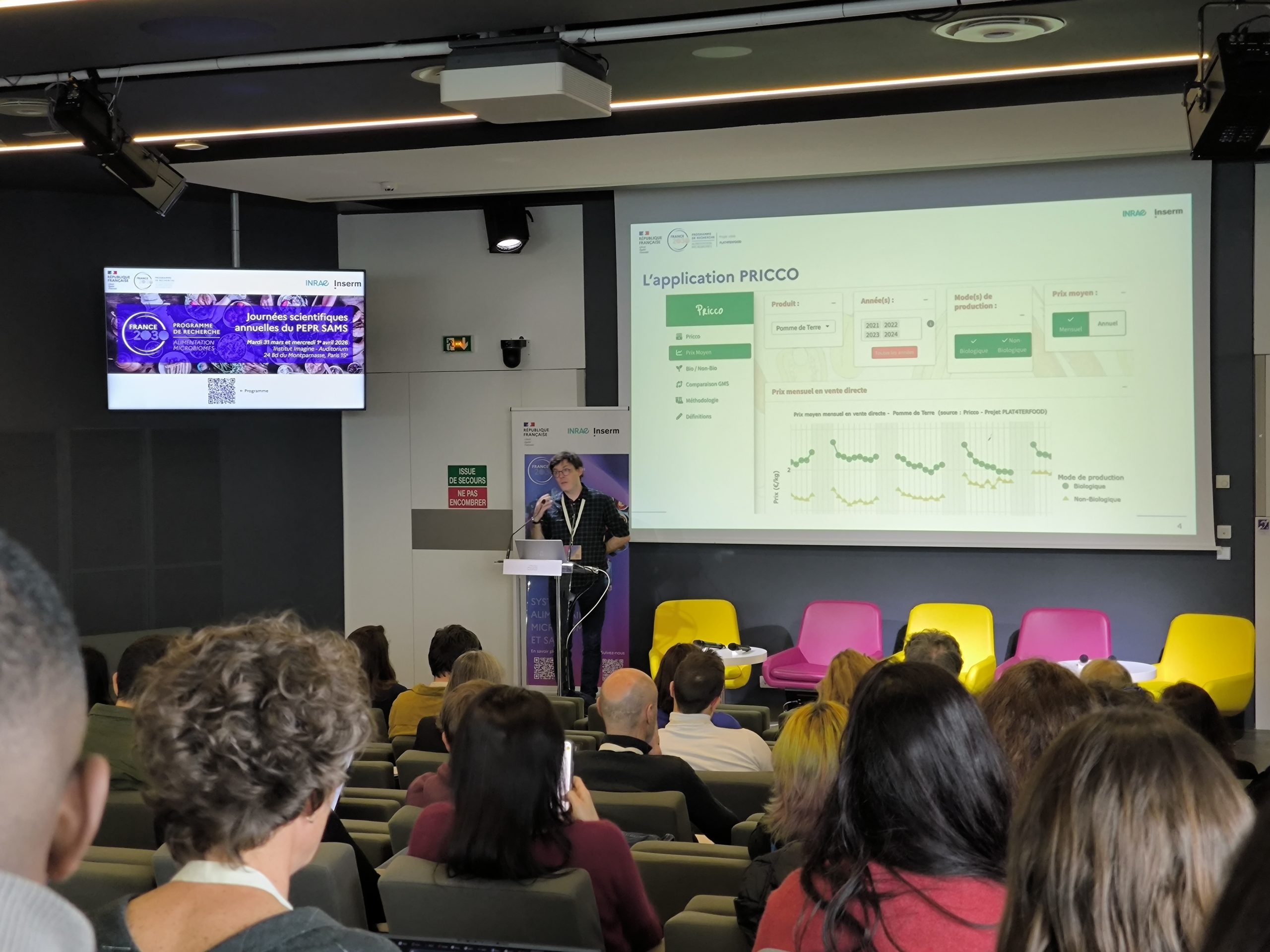
- Pricco, the Short Supply Chain Price Observatory within the PLAT4TERFOOD project with Grégori Akermann
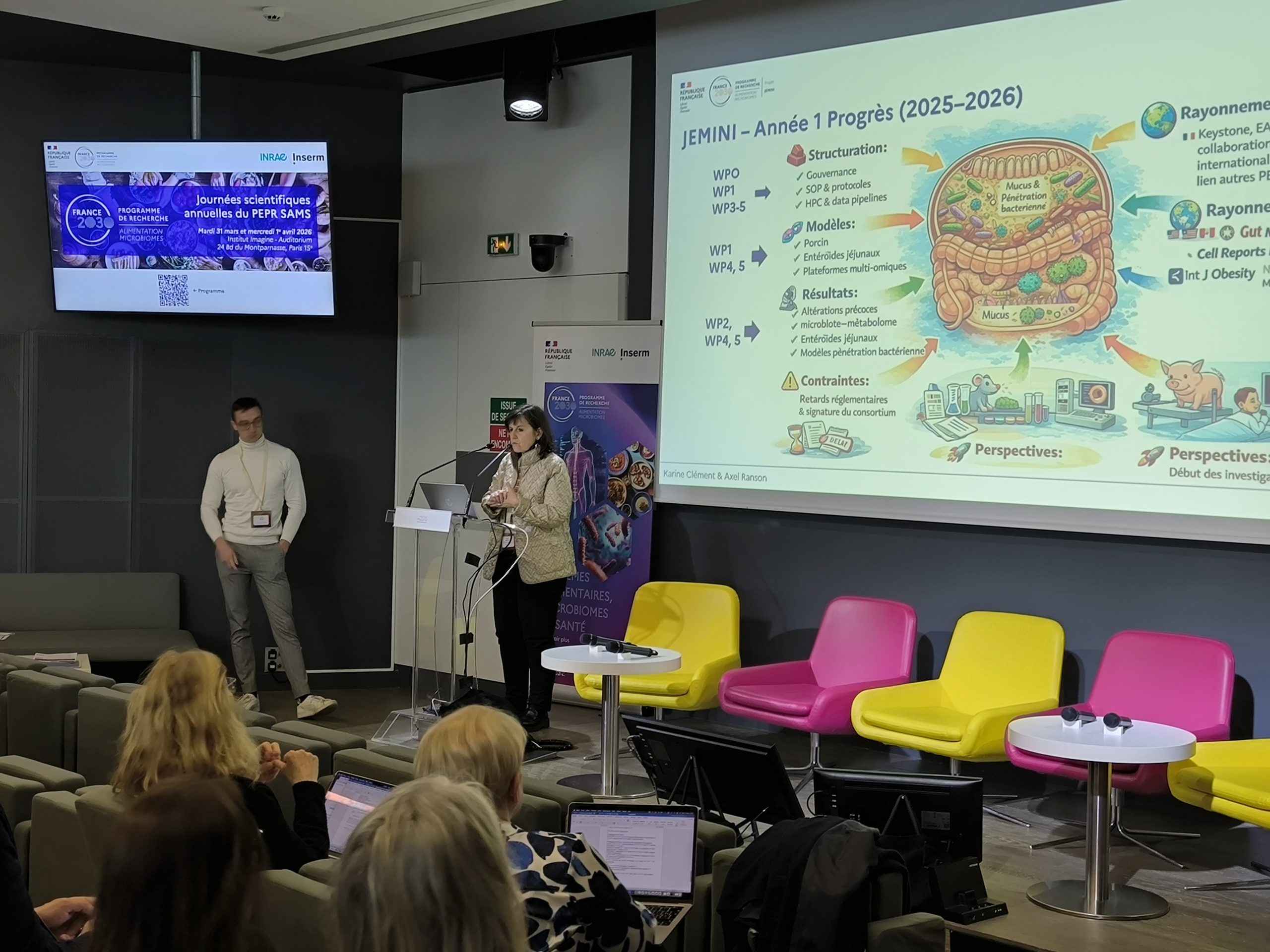
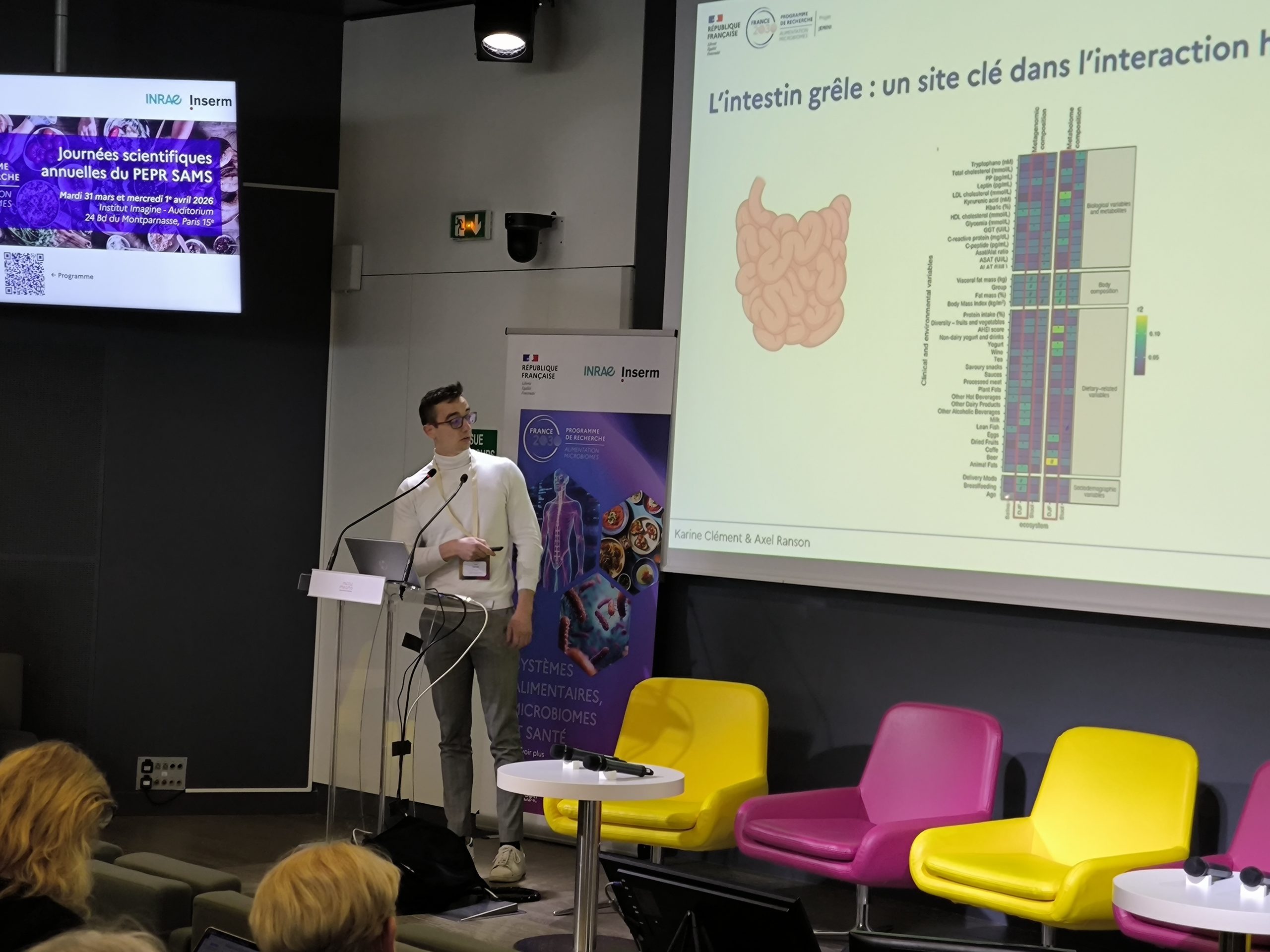
- The publication “The Jejunum Microbiome on the Front Lines Against Moderate Lipid Excess in a Porcine Model” from the JEMINI project with Axel Ranson and Karine Clément
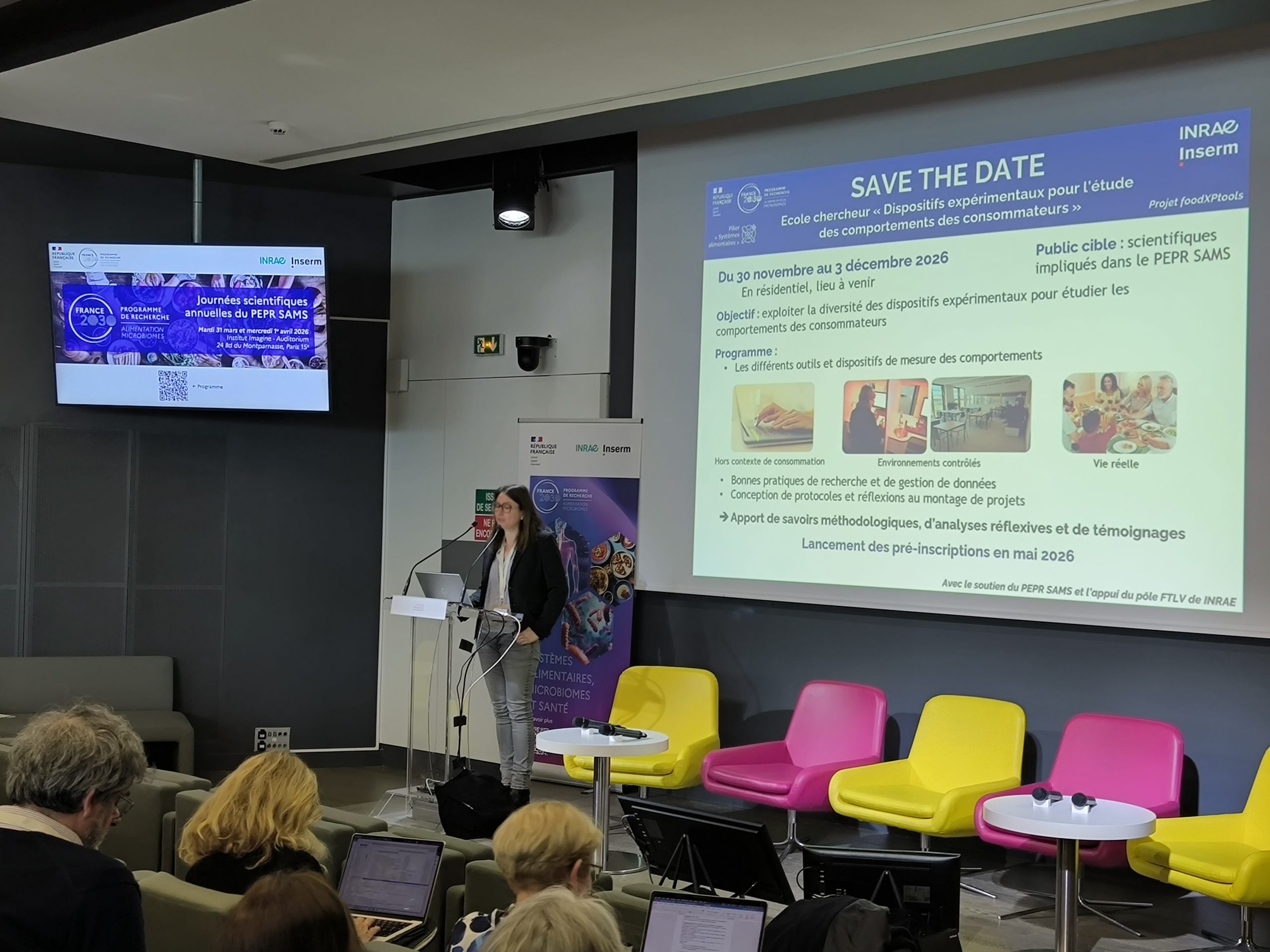
- The foodXPTools project’s research school with Anne Saint-Eve
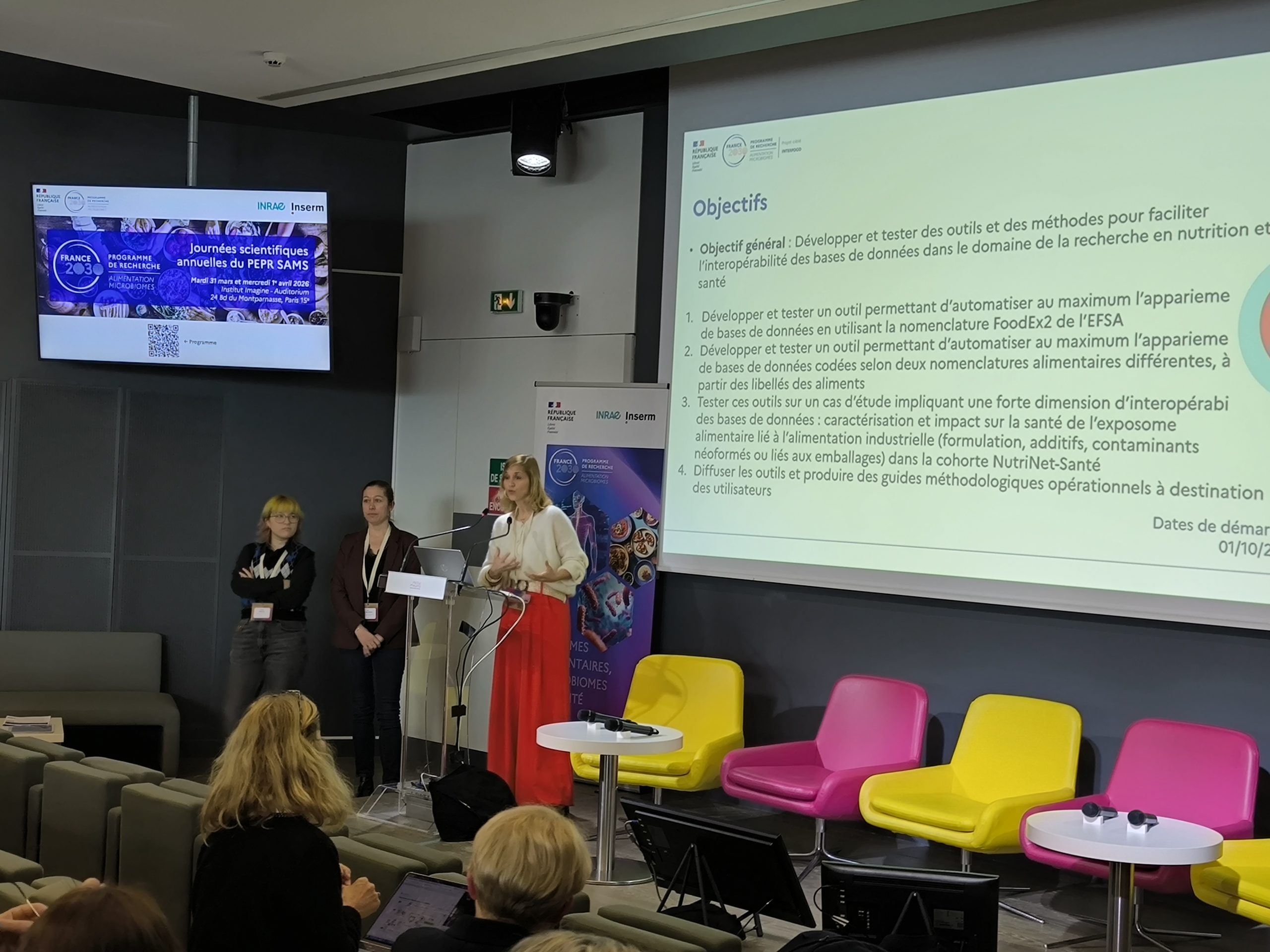
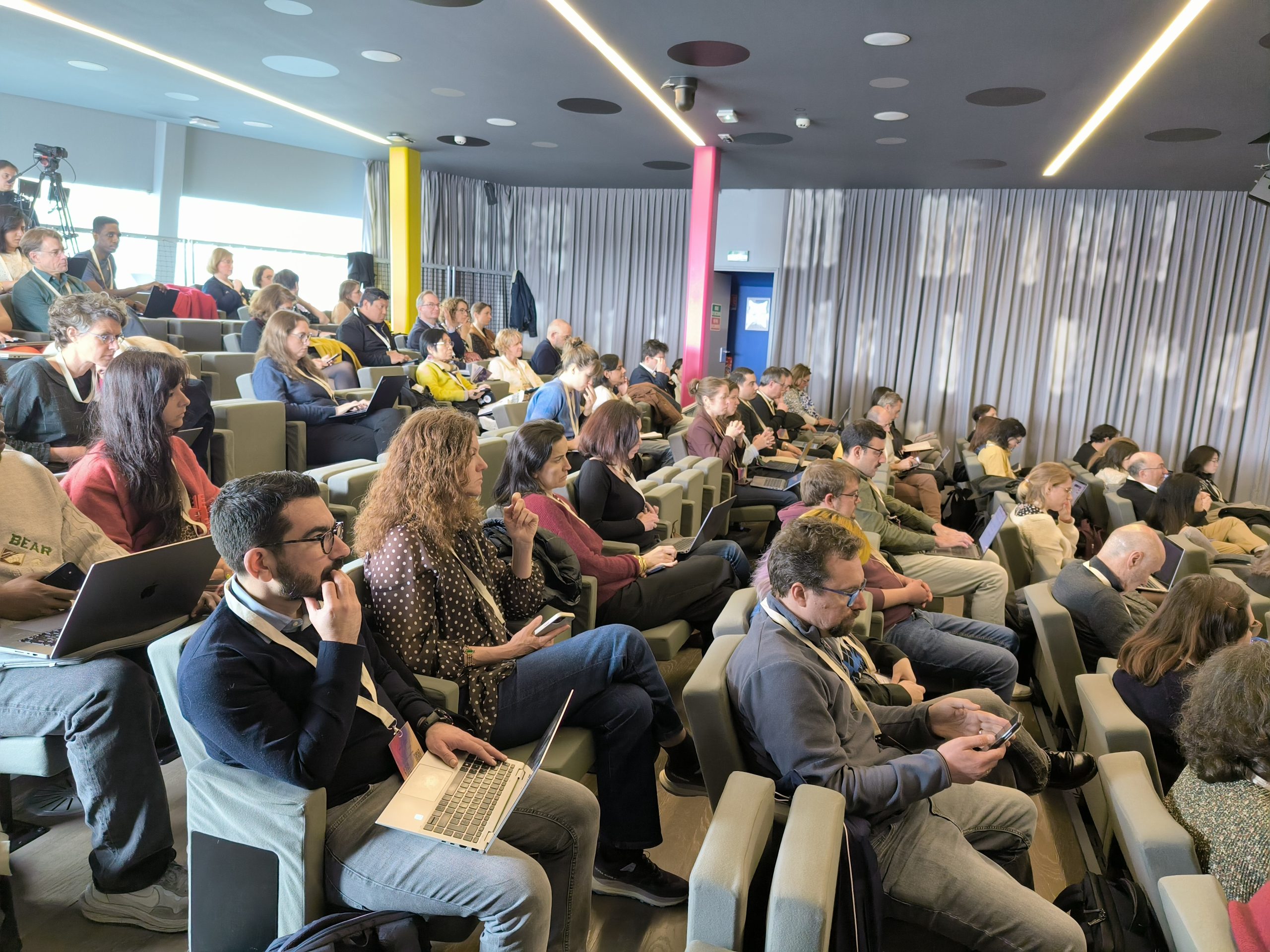
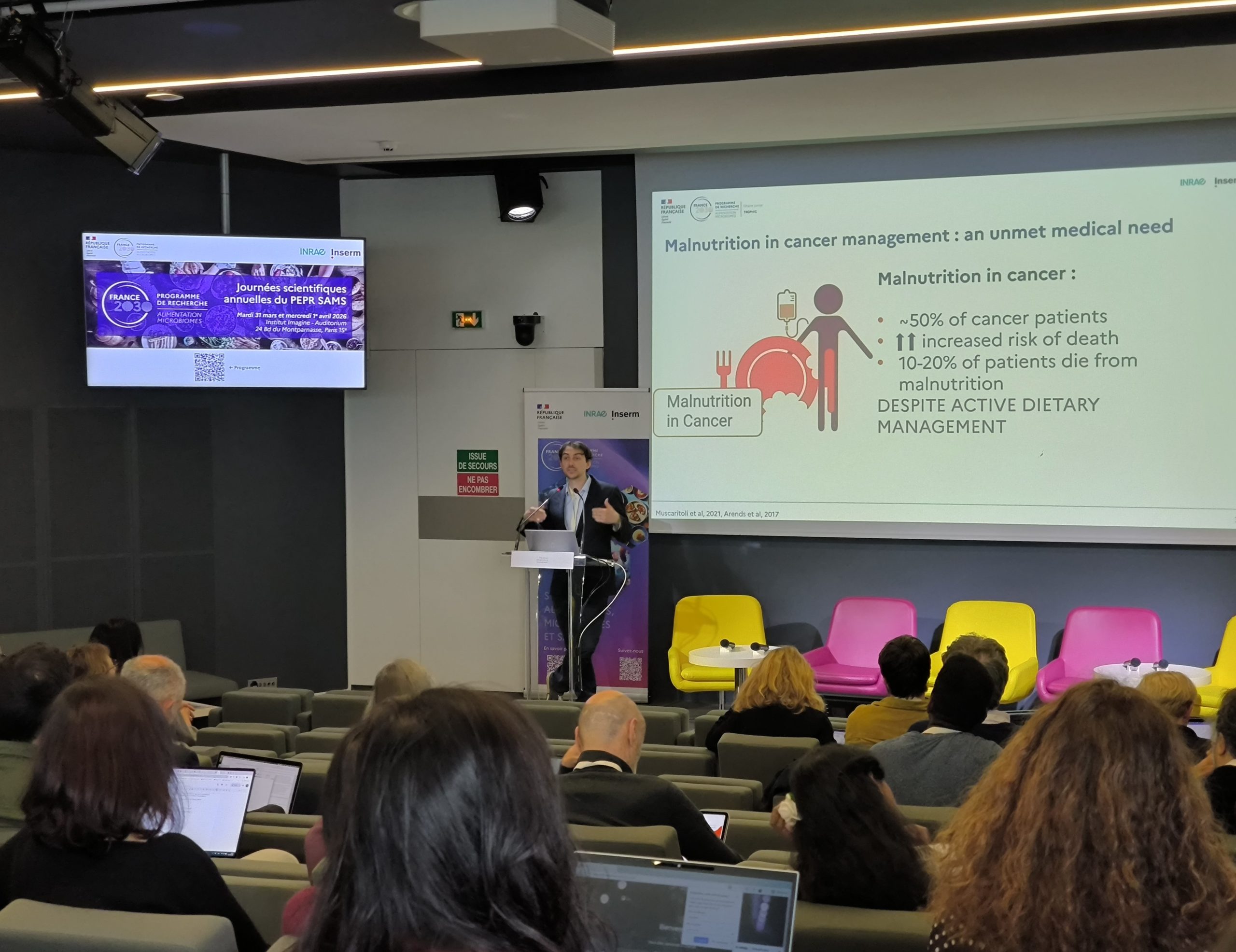
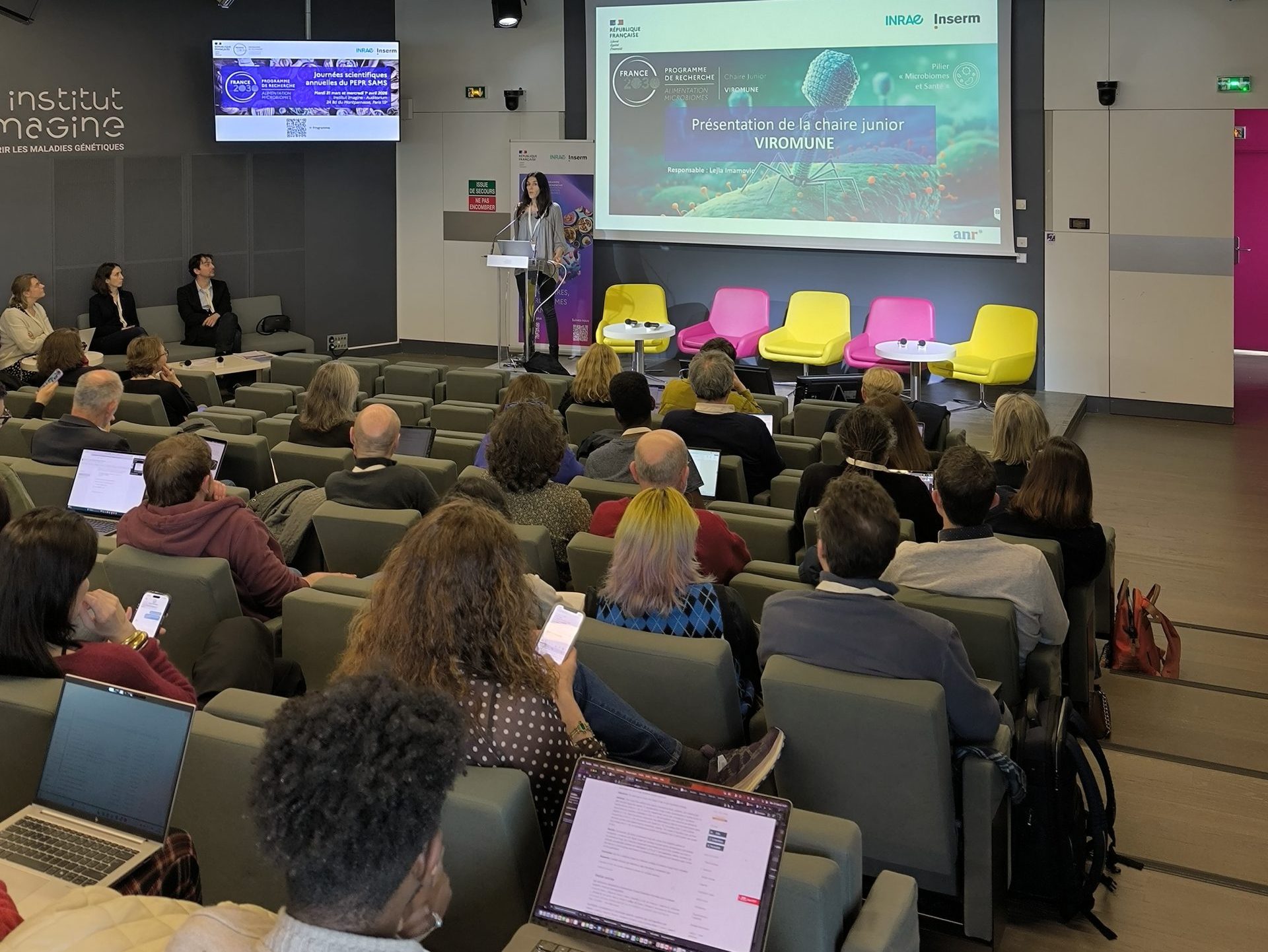
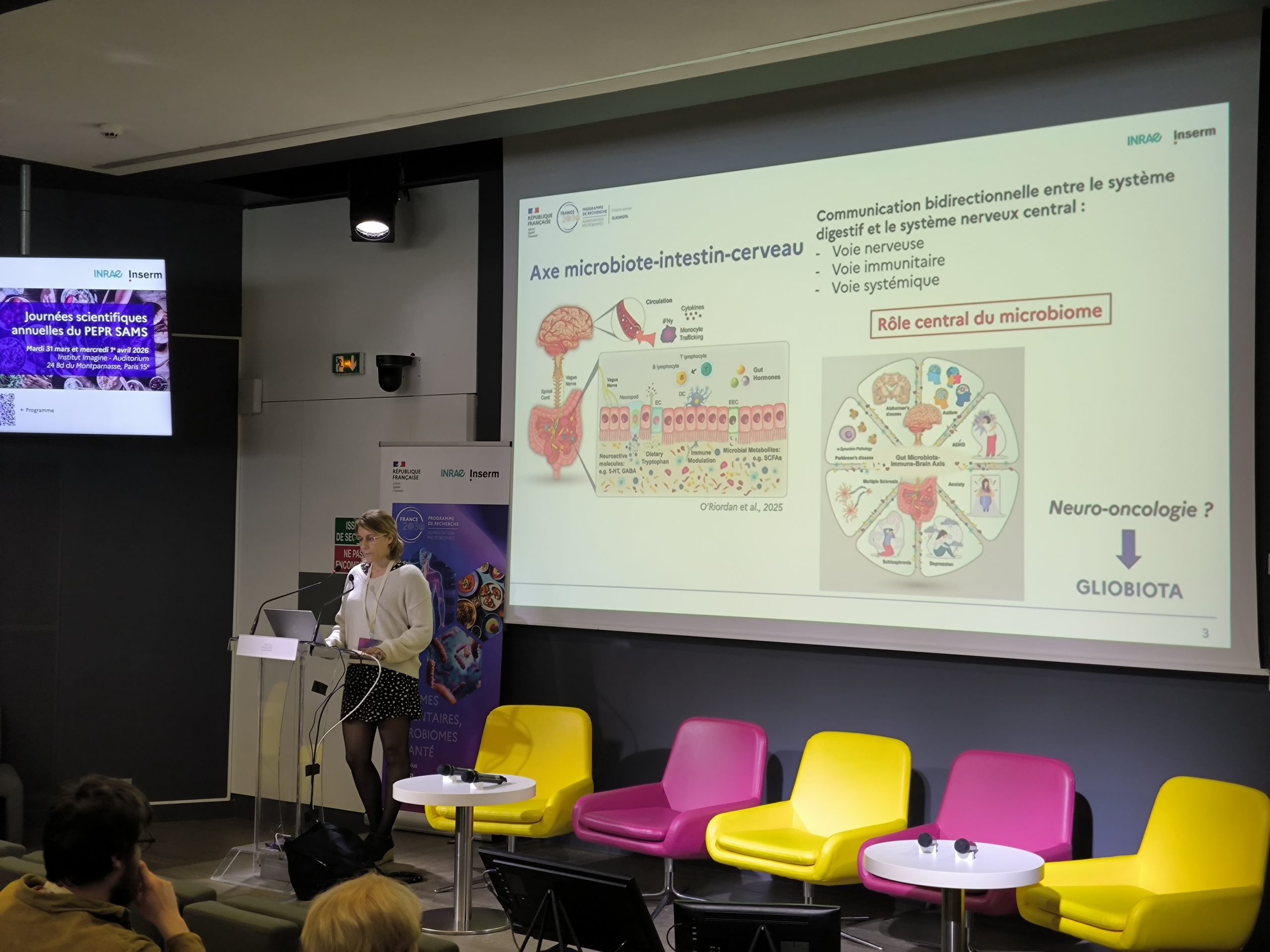
The afternoon of the first day provided an opportunity to learn about the three junior chair projects newly funded by the PEPR SAMS:
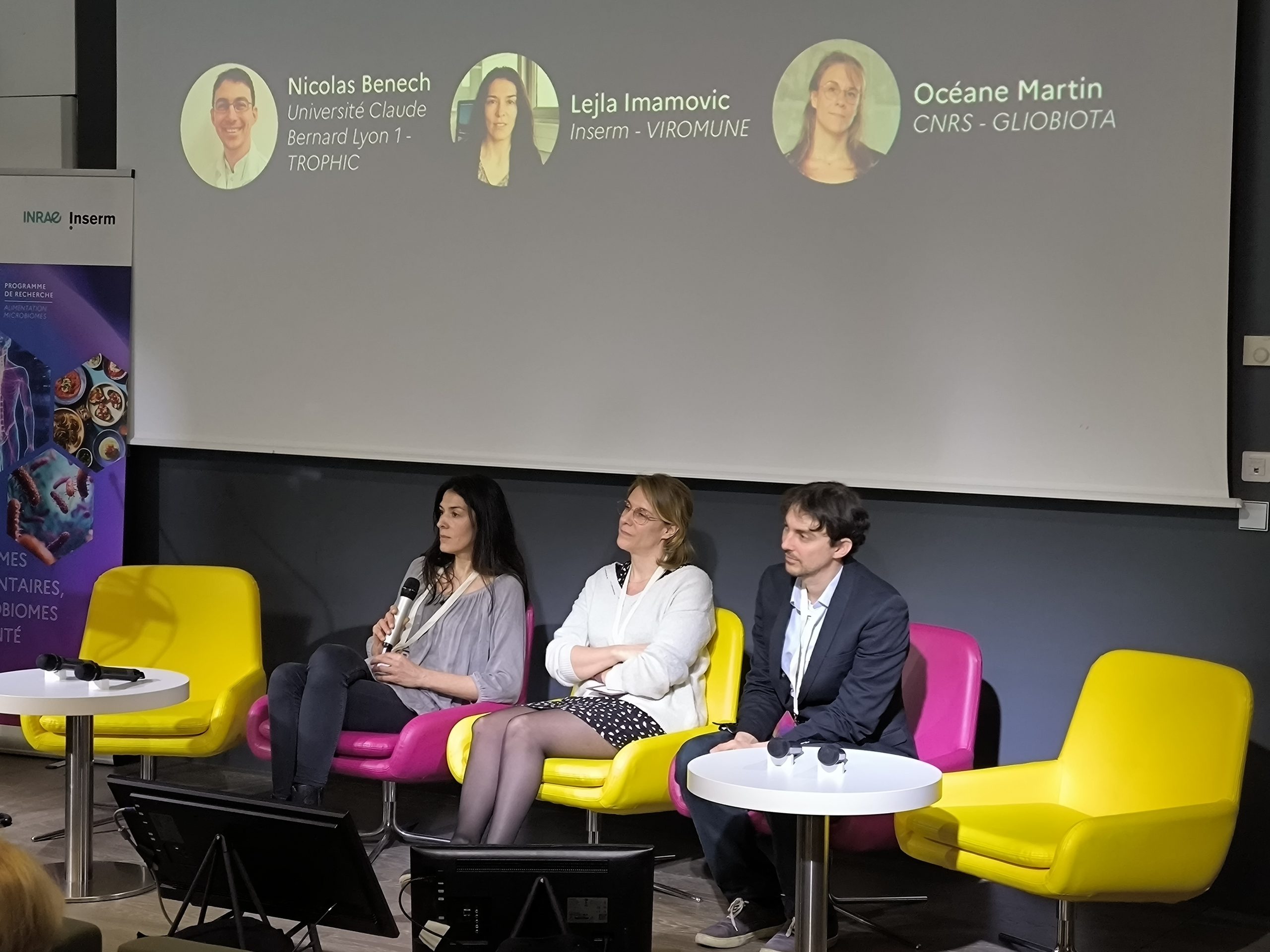
- Nicolas Benech presented his TROPHIC project
- Lejla Imamovic presented her VIROMUNE project
- Océane Martin presented her GLIOBIOTA project
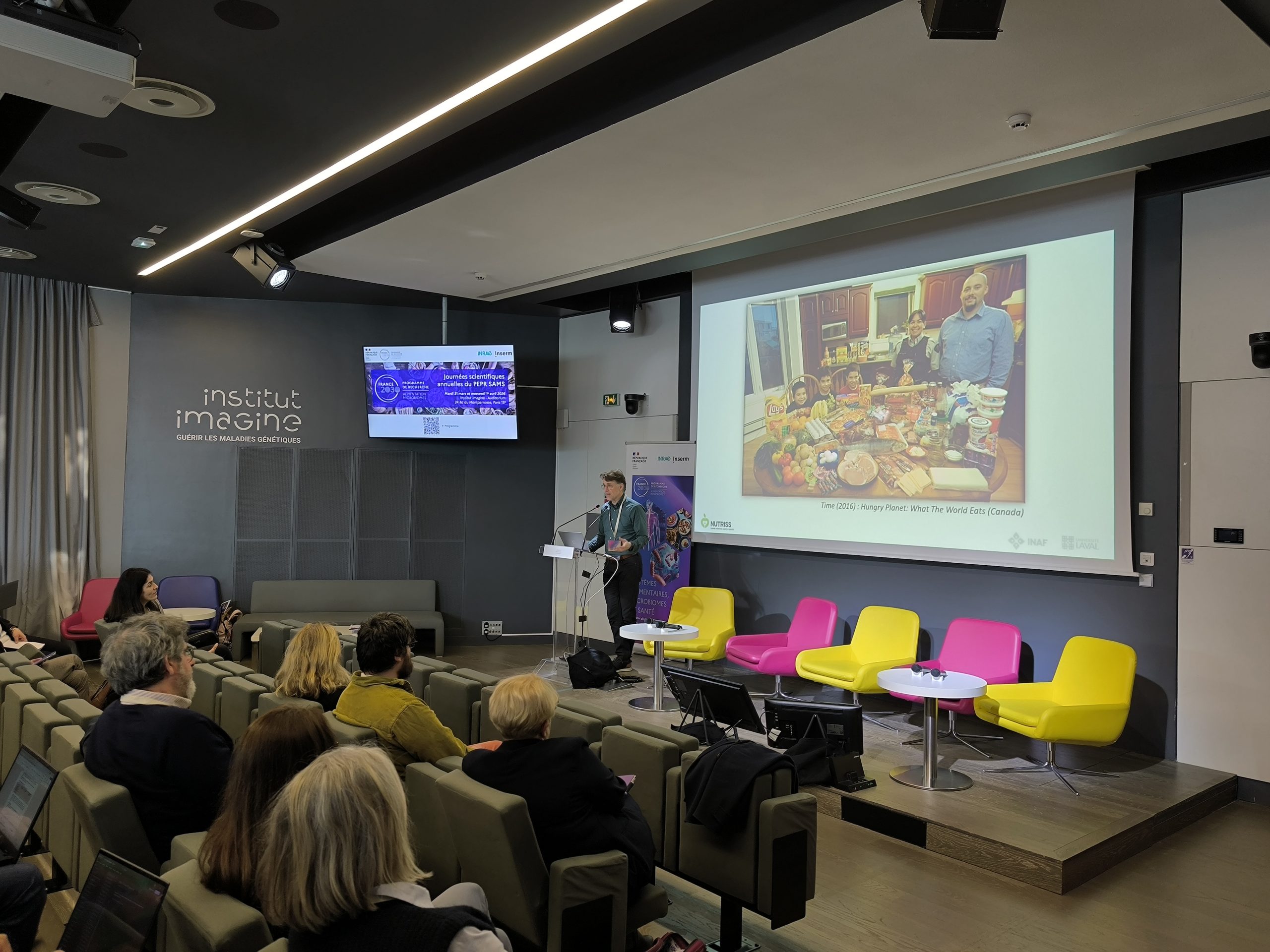
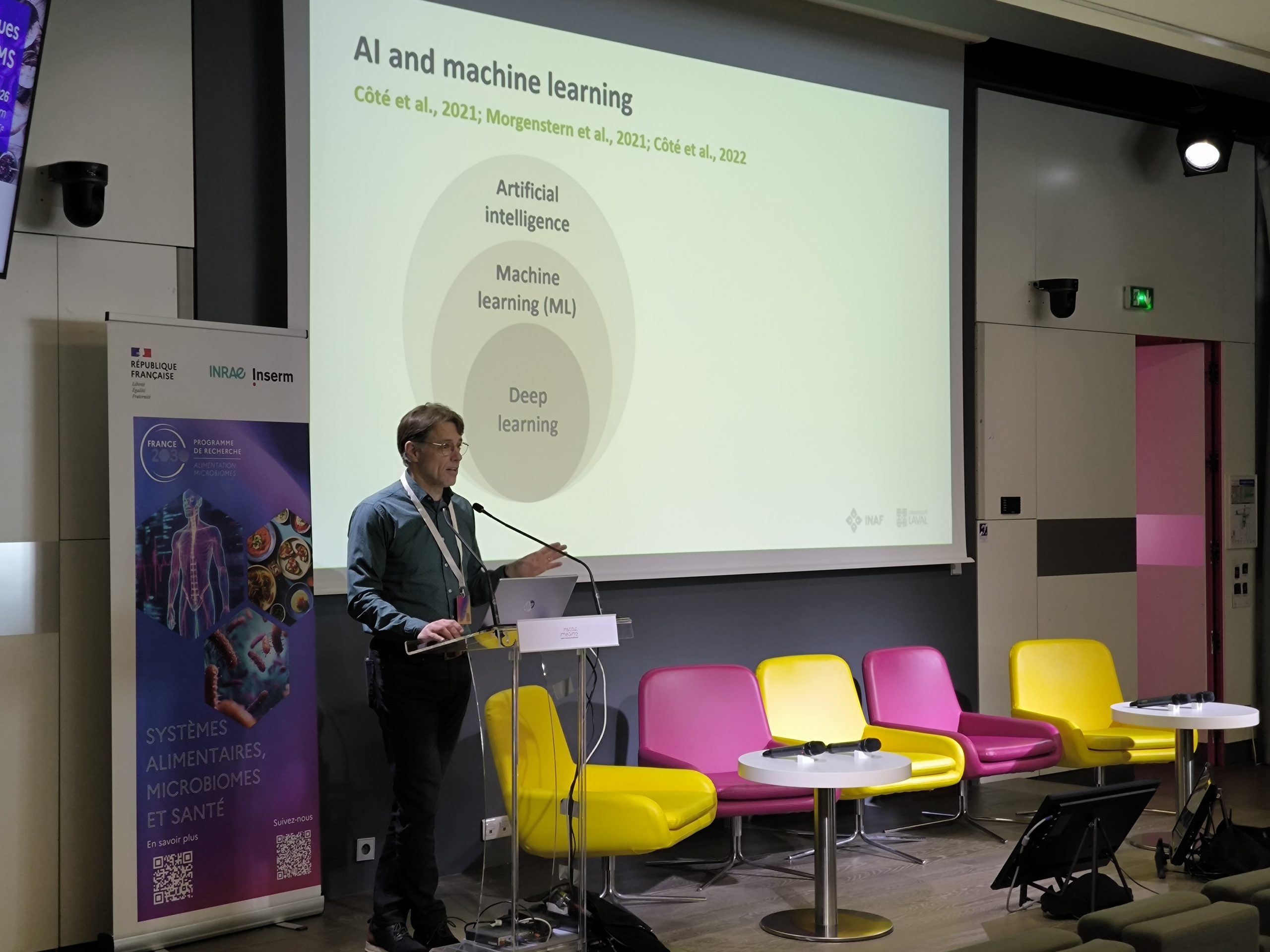
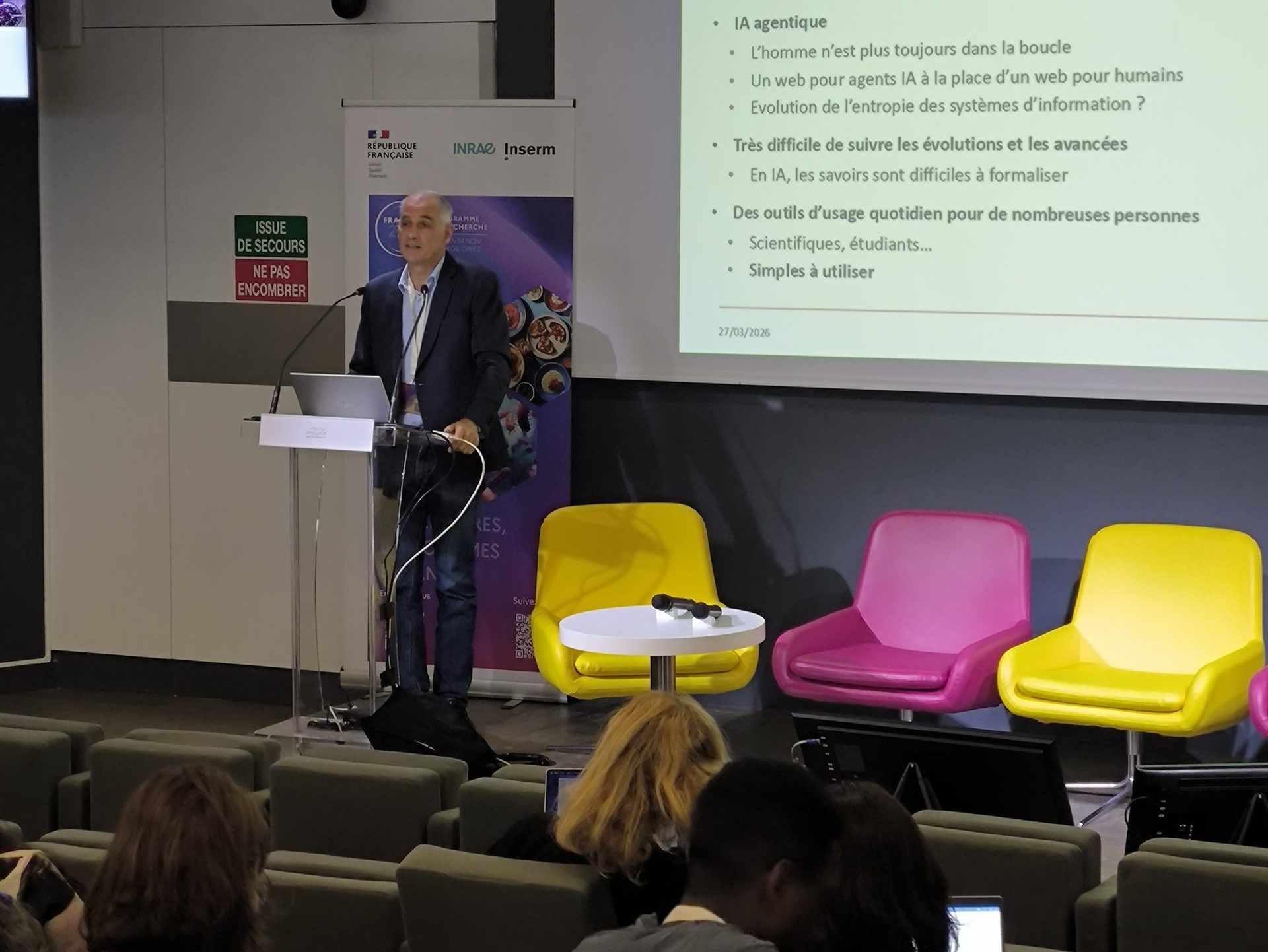
Professor Benoît Lamarche of Laval University in Canada gave a lecture on artificial intelligence and its use in studying eating habits.
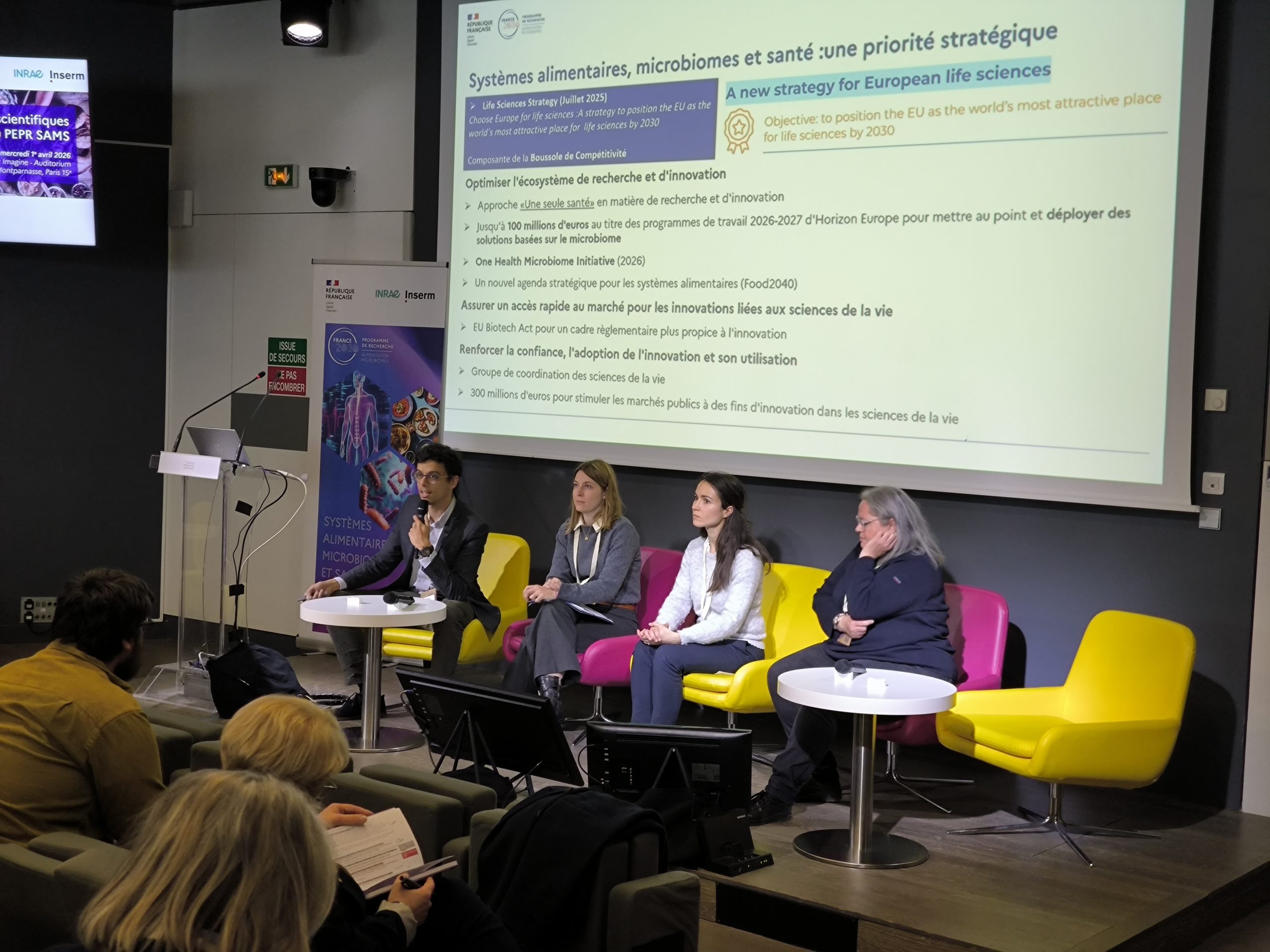
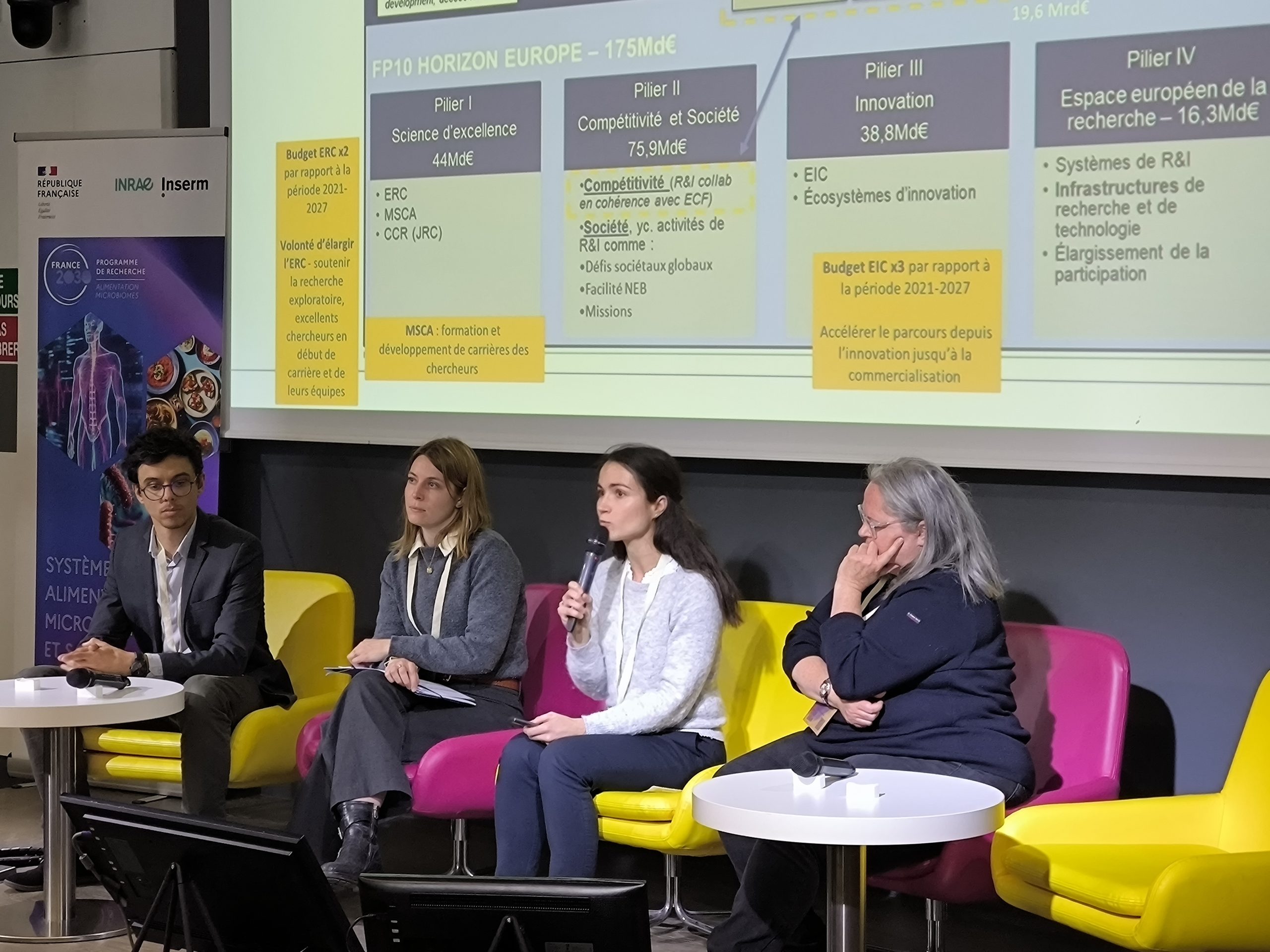
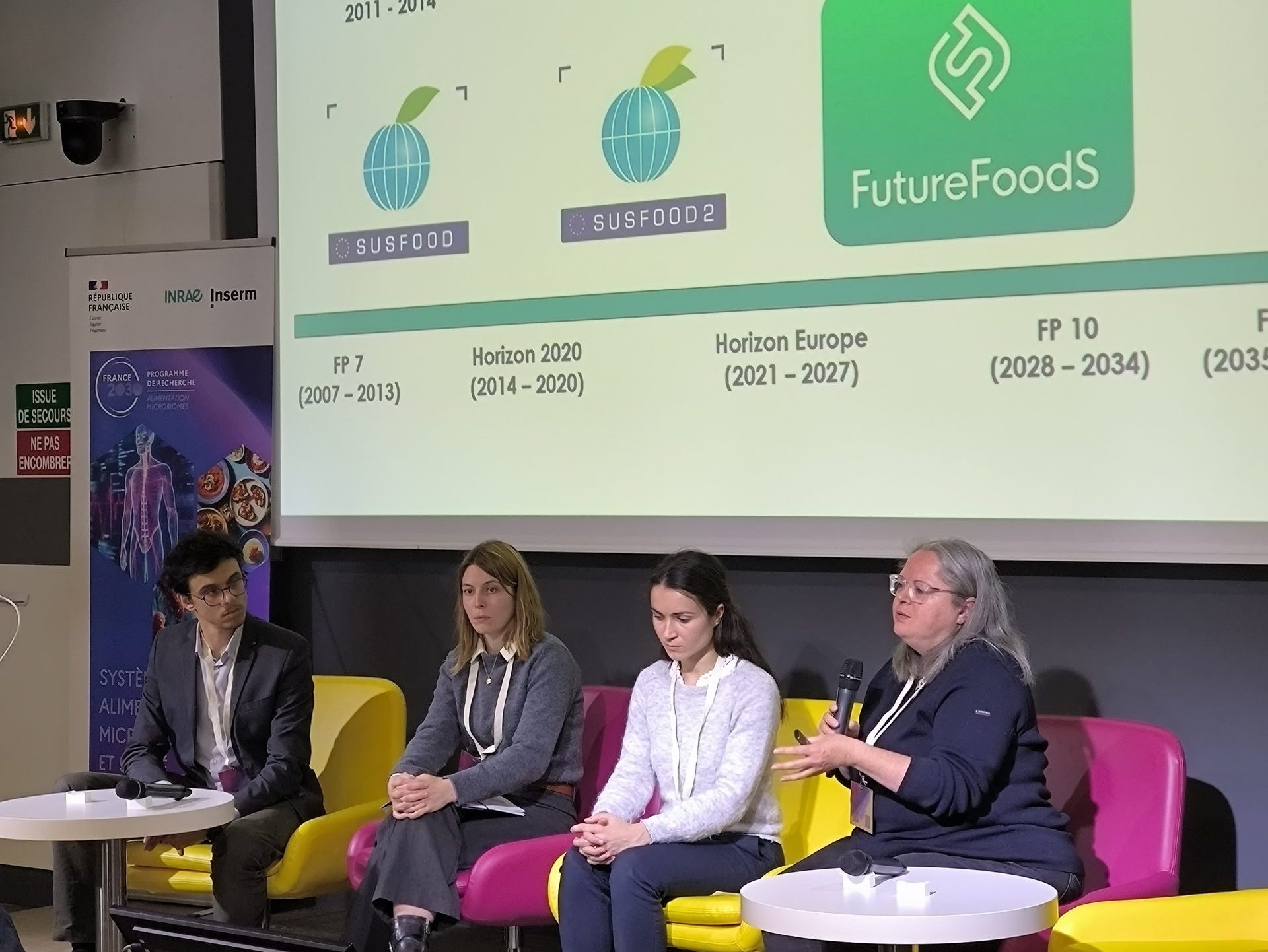
Bertille Folliot, Guillaume Flament, and Aude Raimbault, from the INRAE and Inserm Europe units, then gave a joint presentation on European-level funding opportunities for the SAMS community, after which Claude Yven, from the ANR, presented the European FutureFoodS partnership.
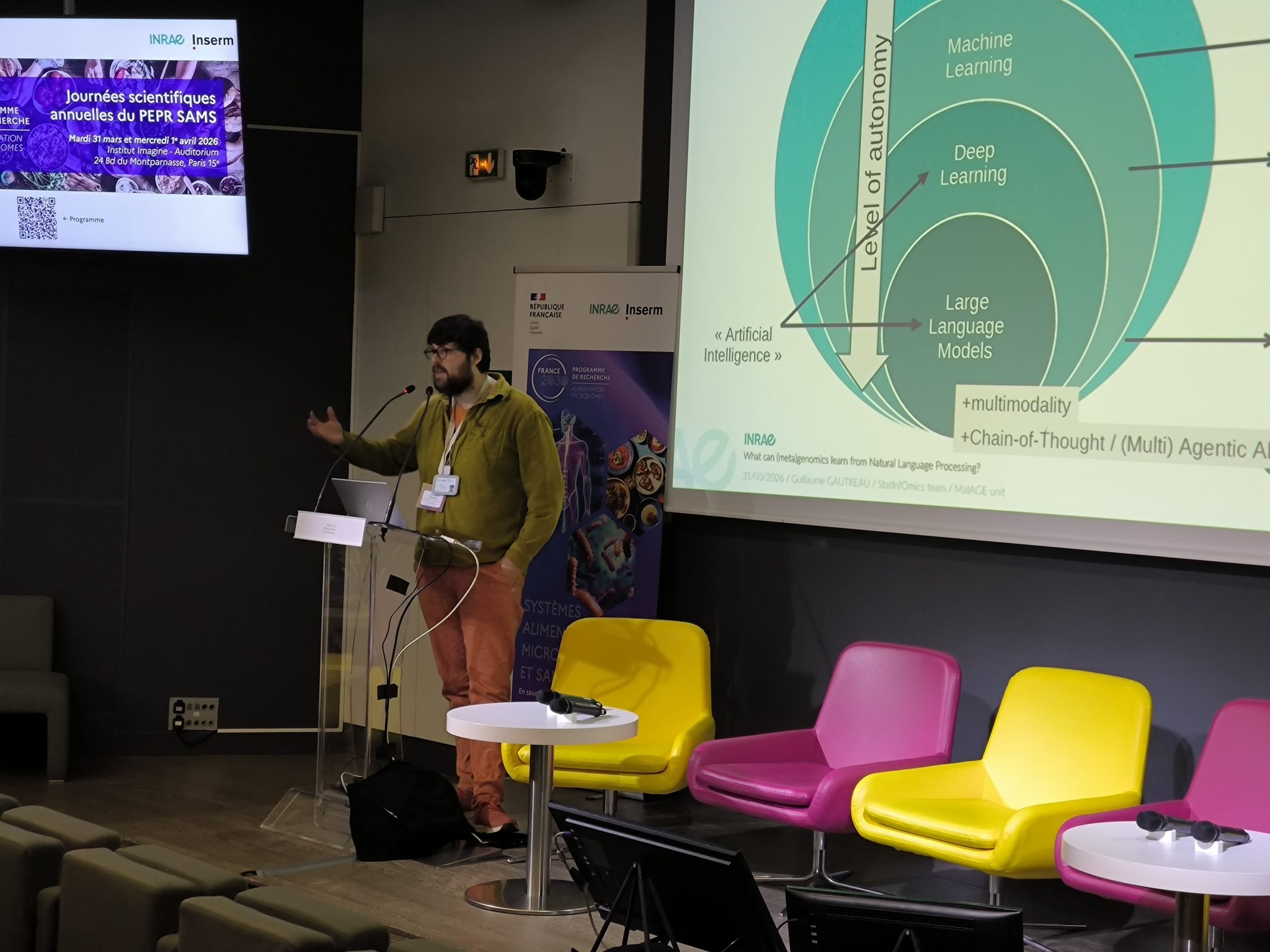
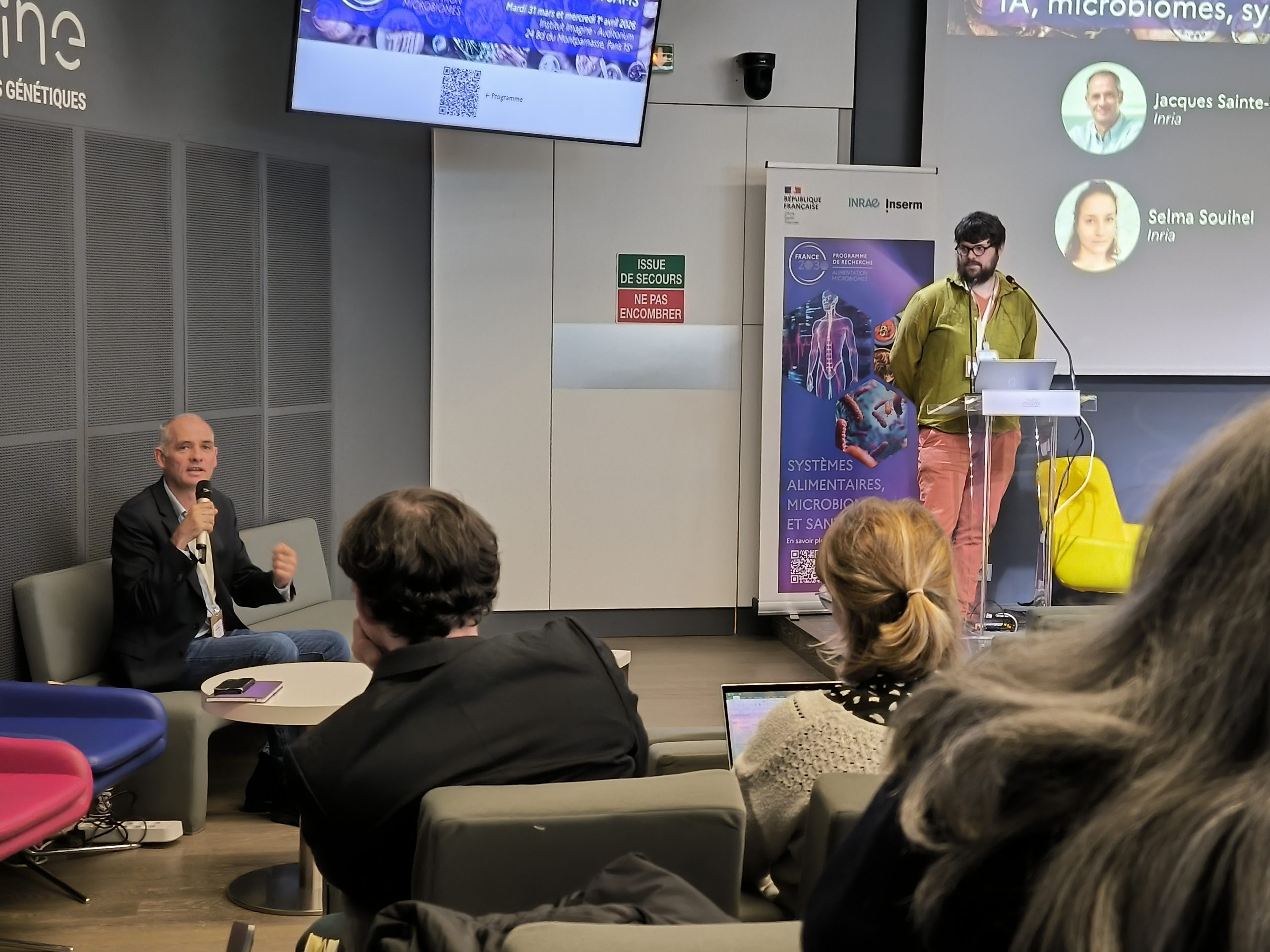
To wrap up the first day, researchers Jacques Sainte-Marie, Guillaume Gautreau, and Selma Souihel gave a series of presentations and discussed the use of AI in research on microbiomes, food systems, and health.
The second day began with the second “Highlights” session on SAMS projects, which featured:
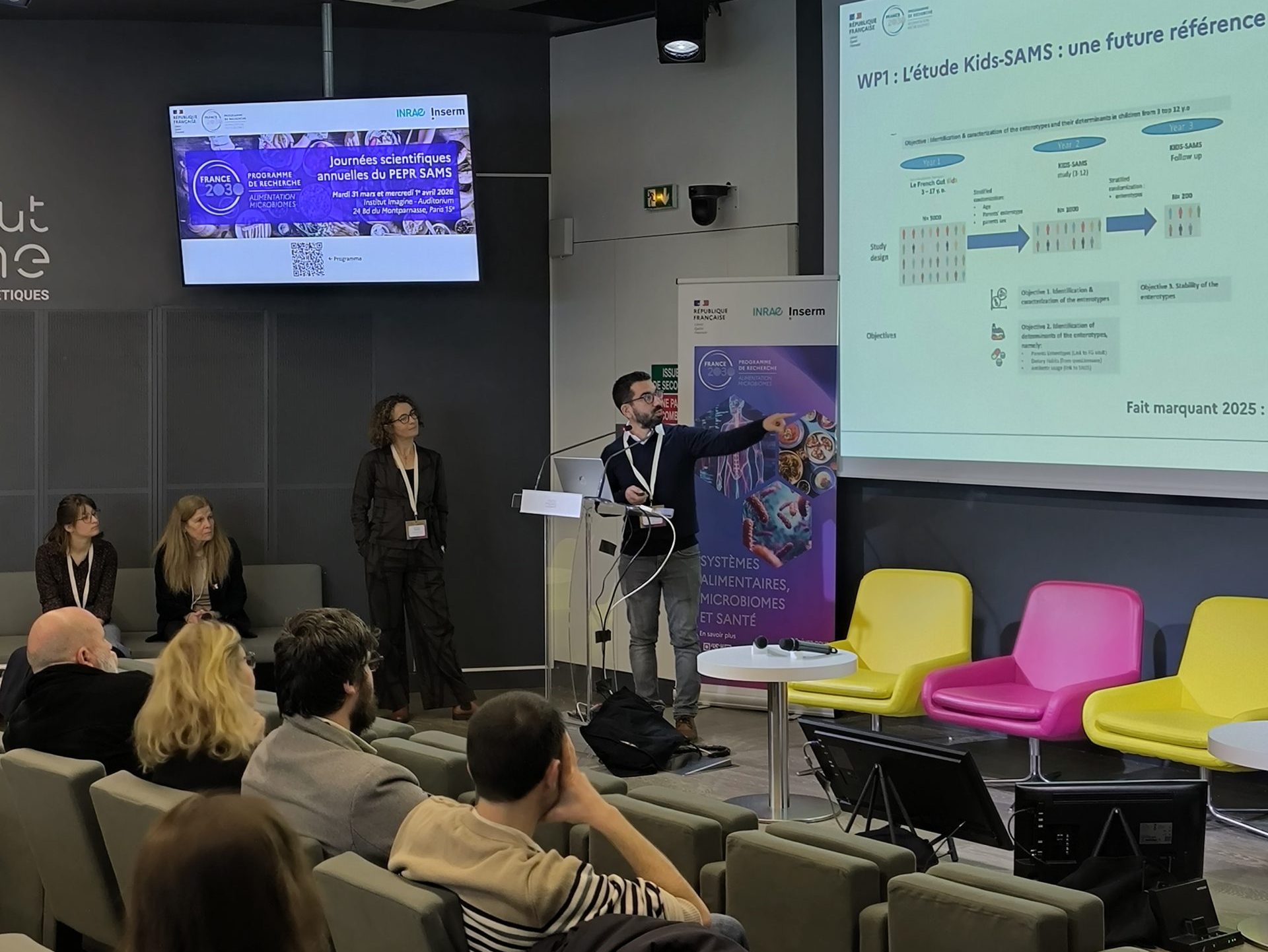
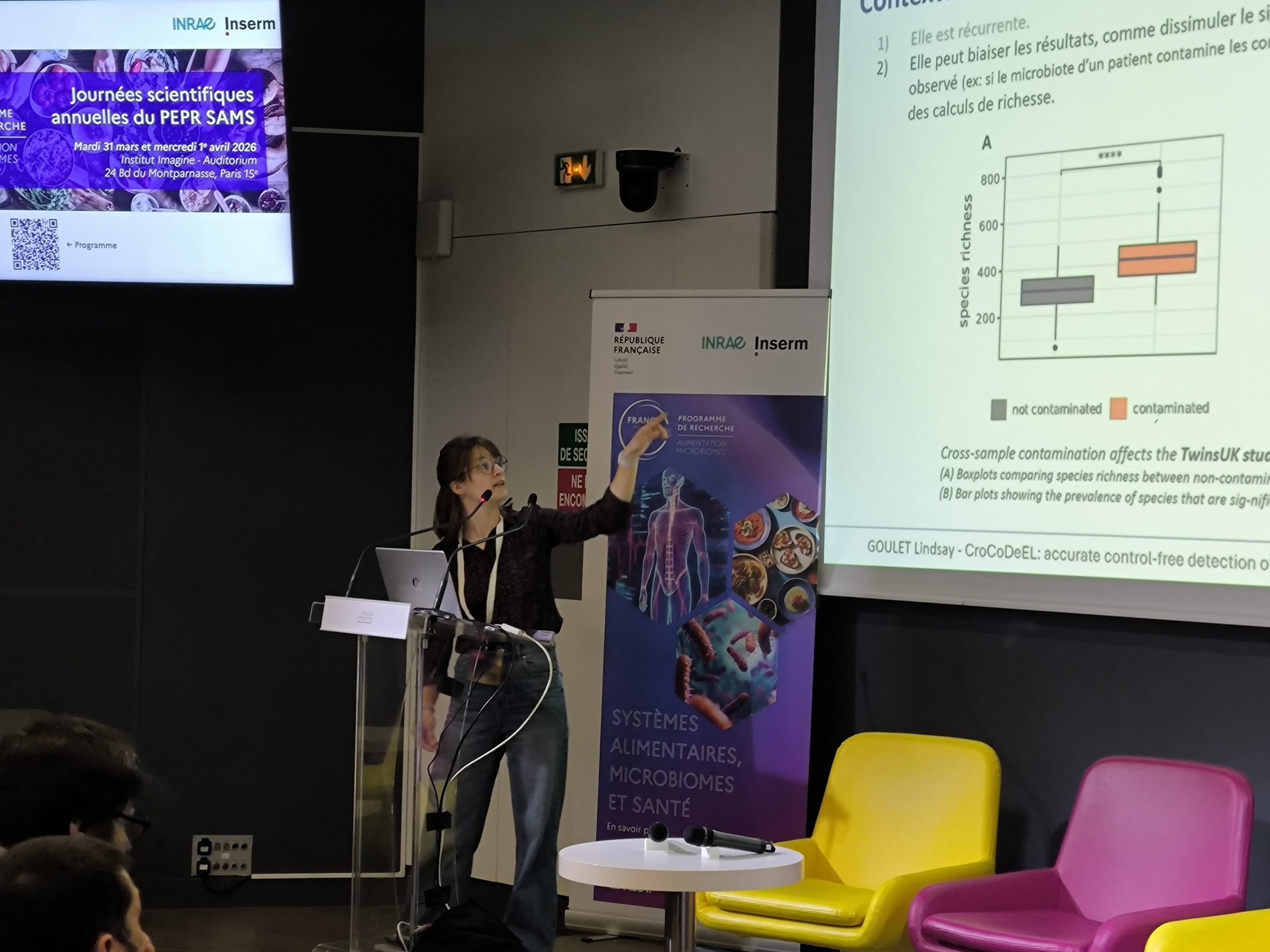
- CroCoDeEL, a tool for detecting cross-contamination between samples in metagenomic data from the PREANALYTICS project, presented by Lindsay Goulet
- The promotion of synergies and the creation of common tools and references for microbiome-focused cohorts from the COHORTES-MICROBIOMES project with Patrick Veiga and Bénédicte Monnerie
- Robust data on sustainable food production adapted to the Réunion context from the CARI project with Caroline Méjean
- The publication “MBRA 3.0: integration of the mucosal environment for advanced high-throughput modeling of the intestinal microbiome in vitro as part of the AddiMapping project” with Benoît Chassaing
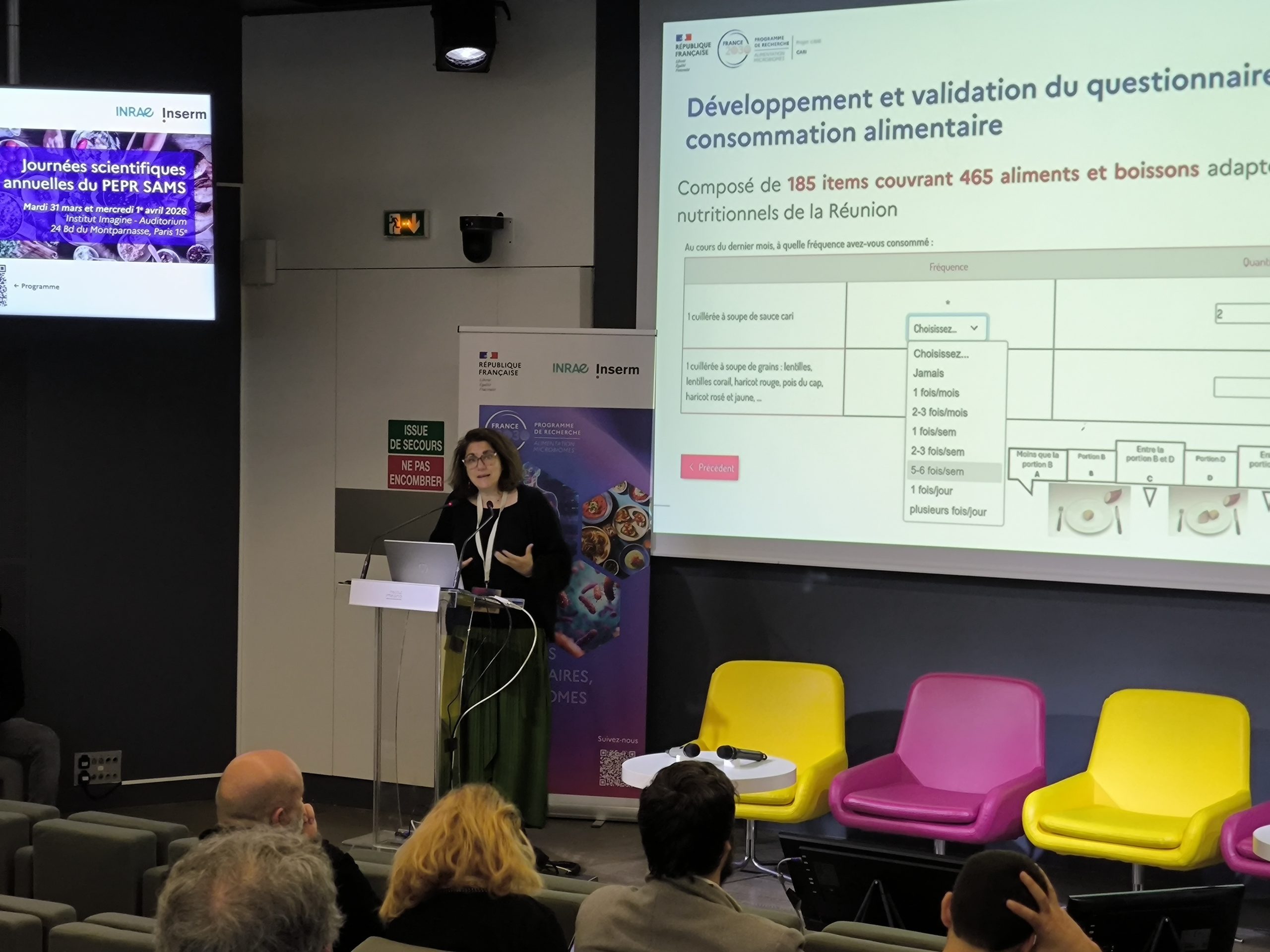
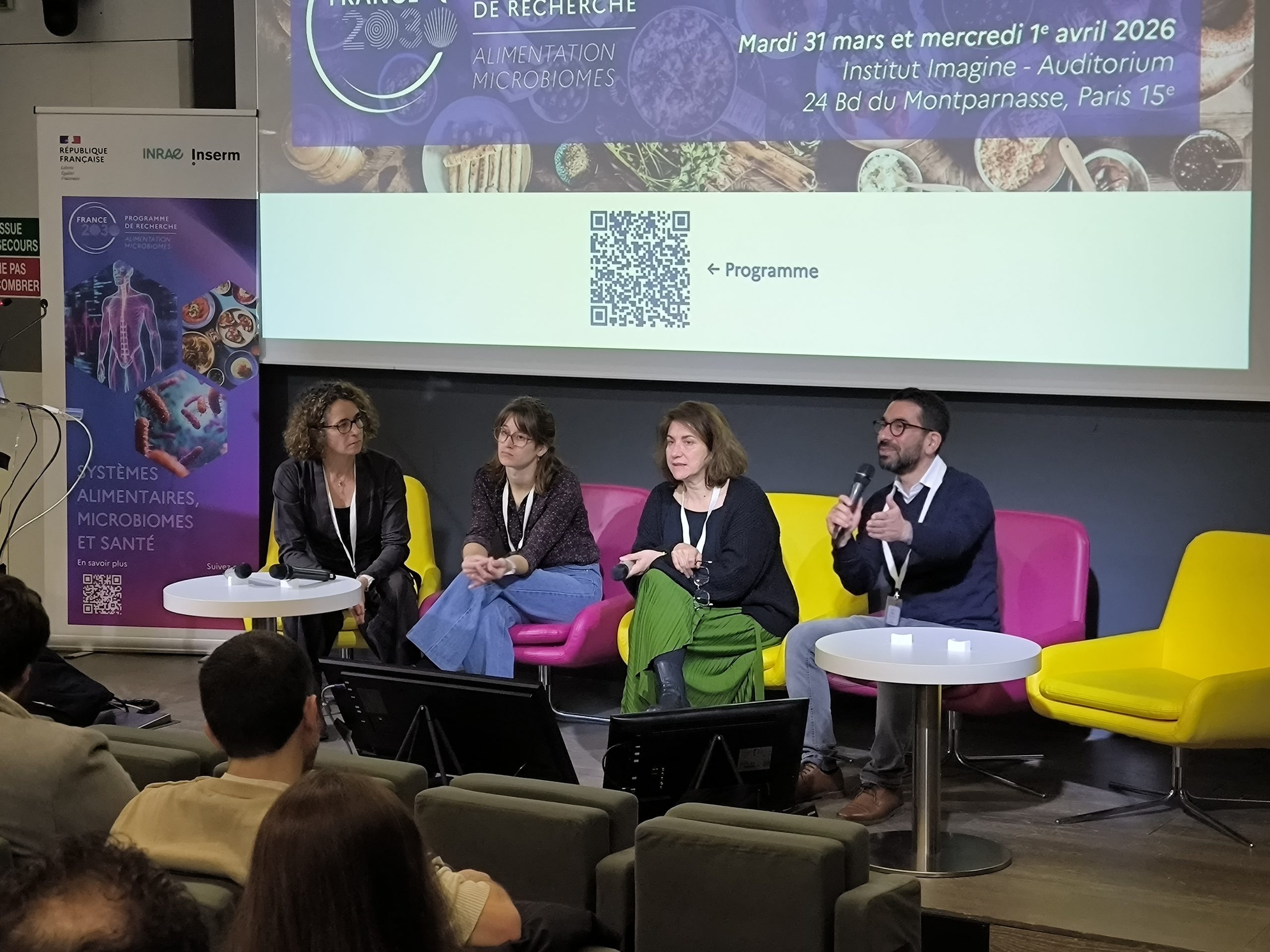
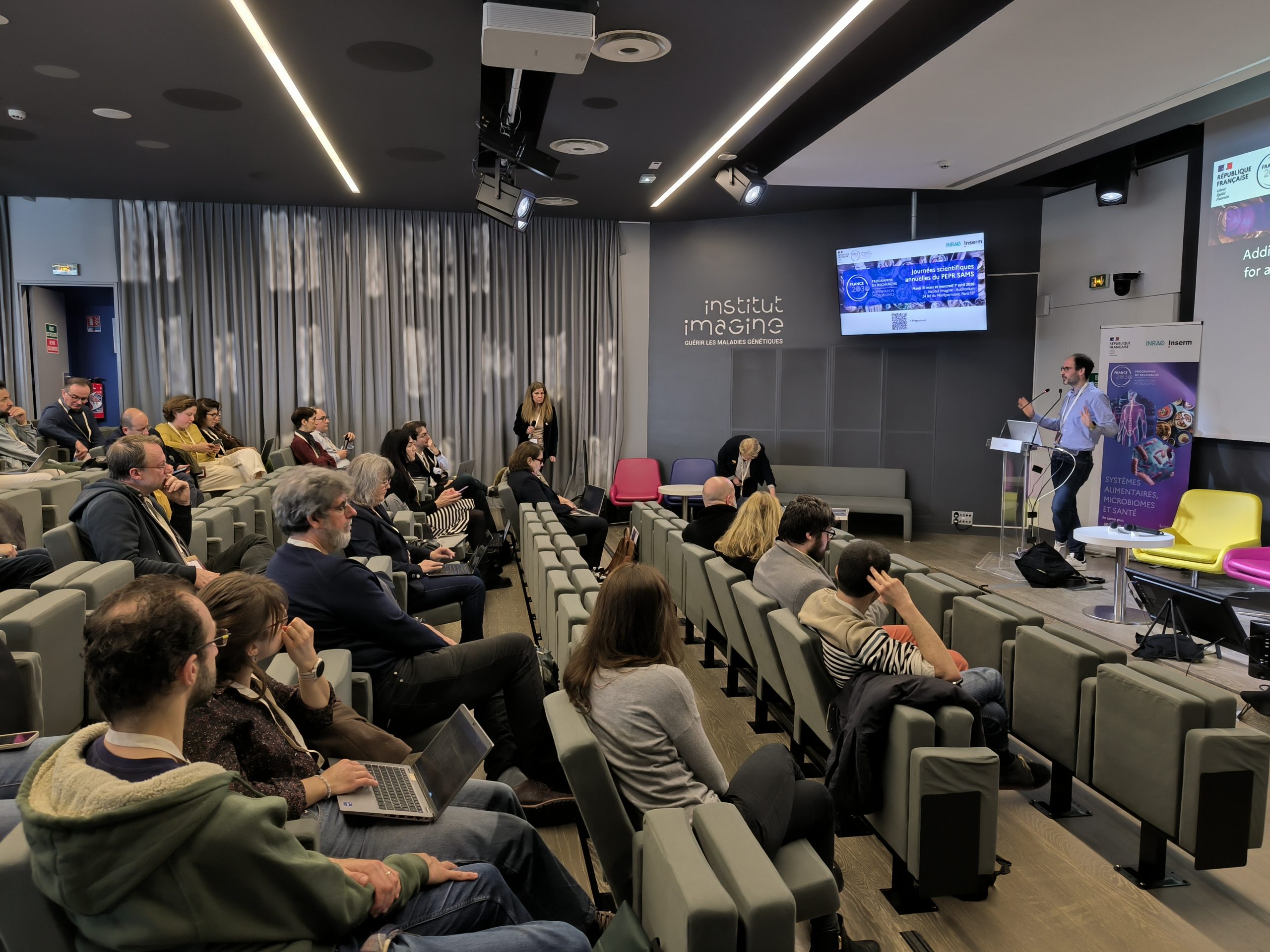
The morning then featured:
- Discussions on the analysis and management of microbiome data with Hugues Berry, head of Inserm’s AI & Digital Division, and Guillaume Gautreau, INRAE researcher in computational microbiology specializing in the analysis of microbial (meta)genomes. These discussions were moderated by Claudine Médigue and Nicolas Pons, co-leaders of the Cloud4SAMS project.
- A roundtable on participatory science and research featuring a presentation by Fabian Docagne, head of Inserm’s Science and Society Department, followed by testimonials from researchers who have led participatory research projects: Marwân-al-Qays Bousmah (INED), Fabienne El Khoury (Inserm), Alice Bellicha (Sorbonne University Paris North), and Claire Sulmont-Rossé (INRAE)
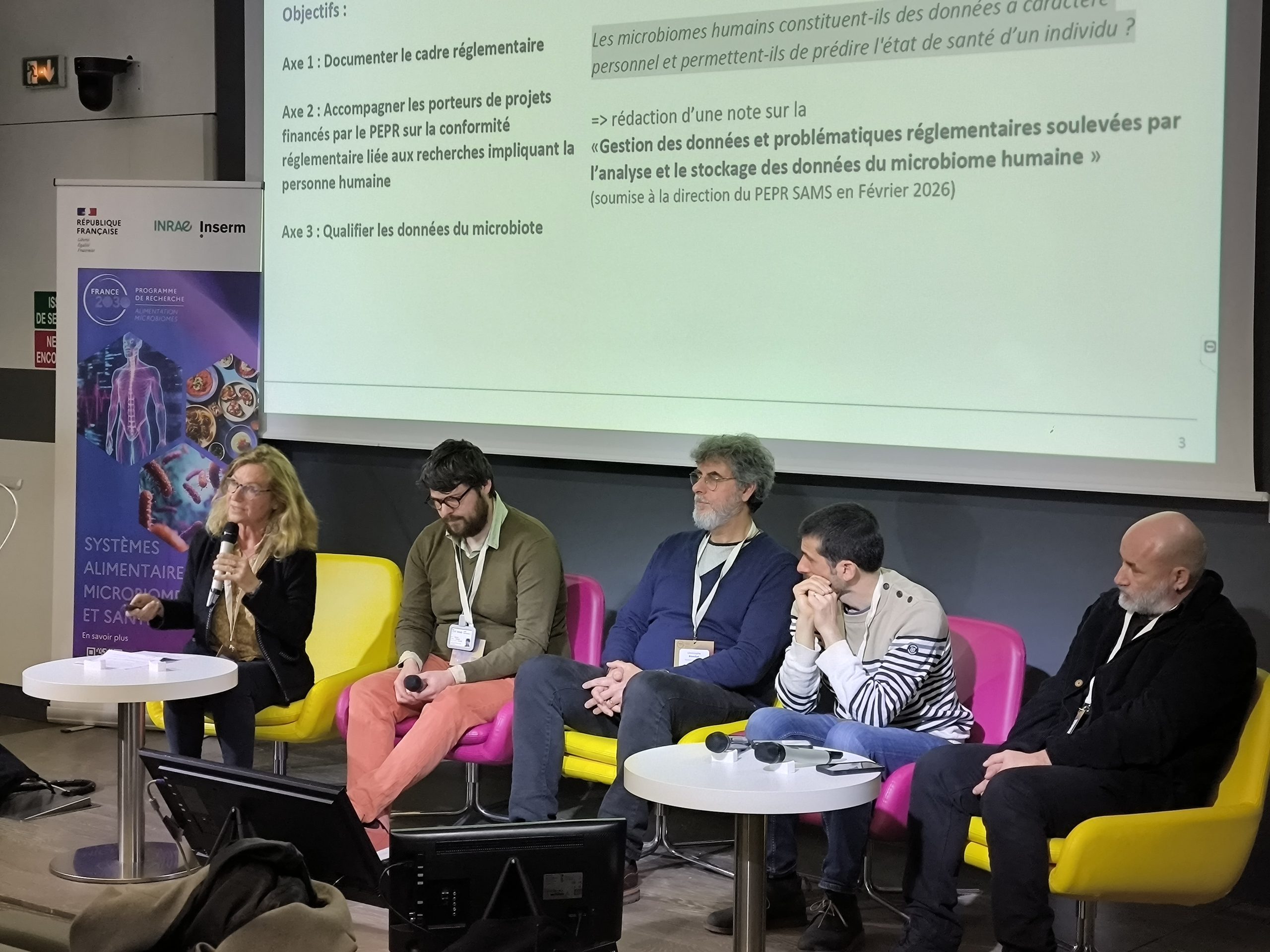
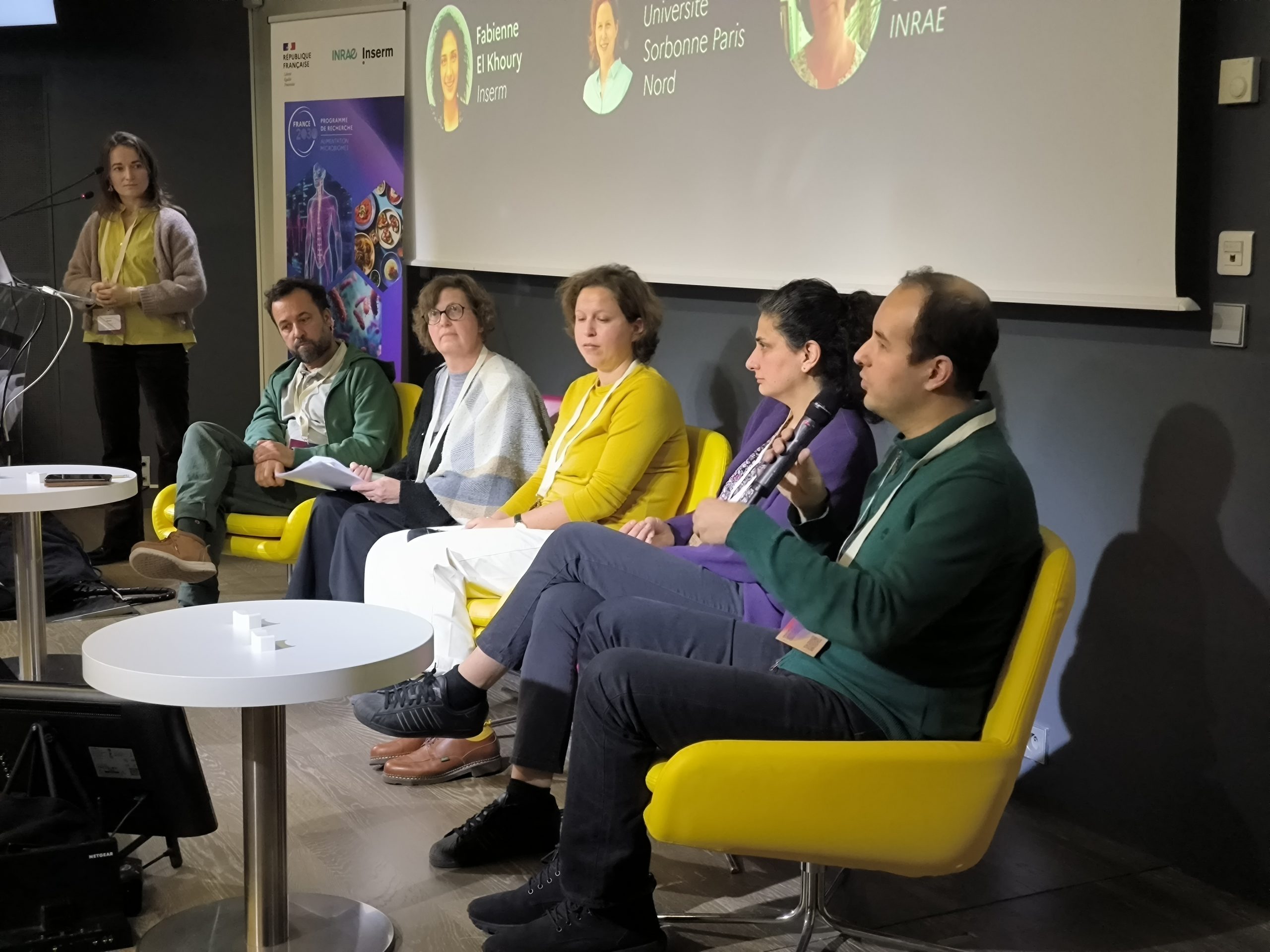
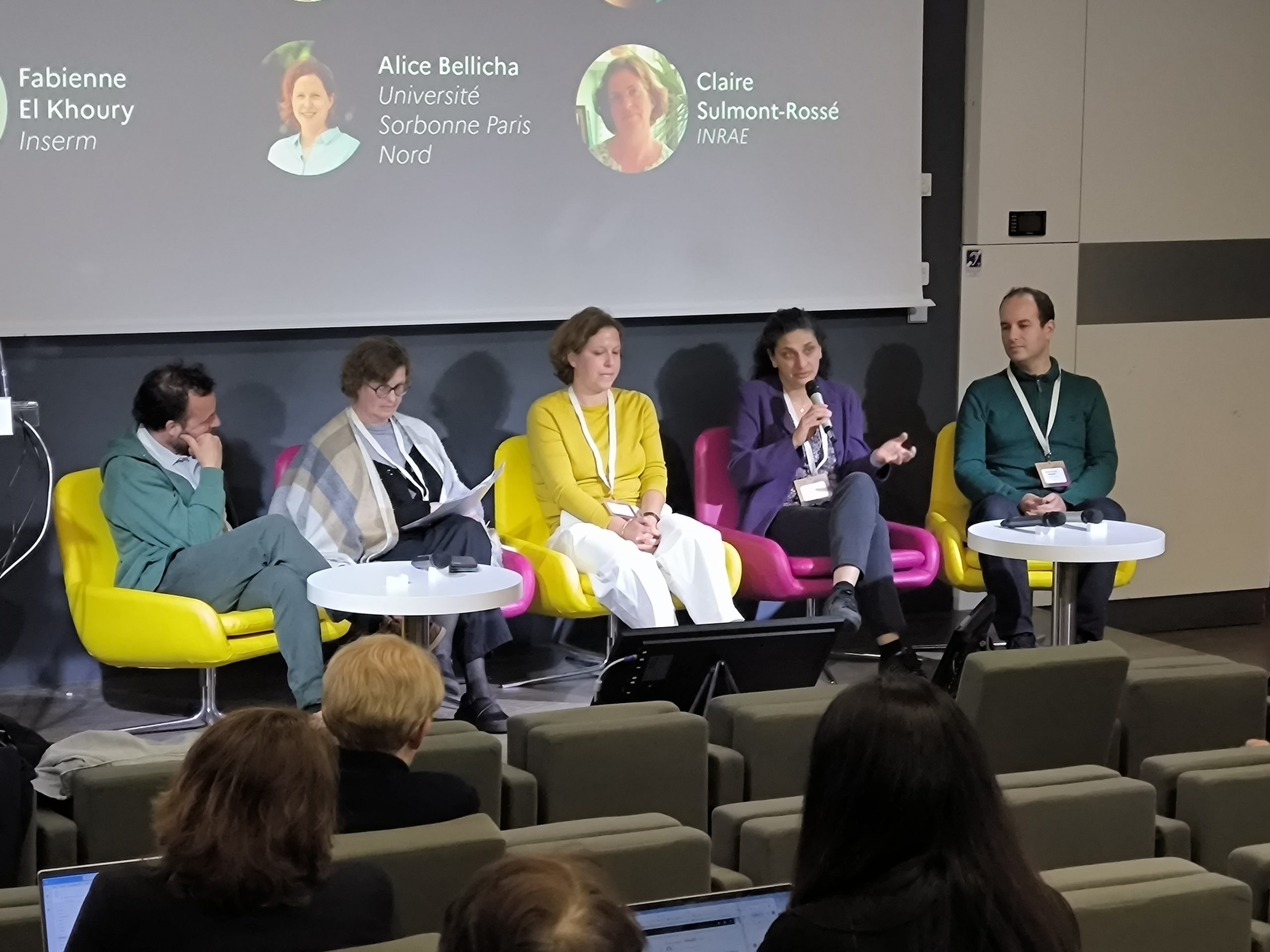
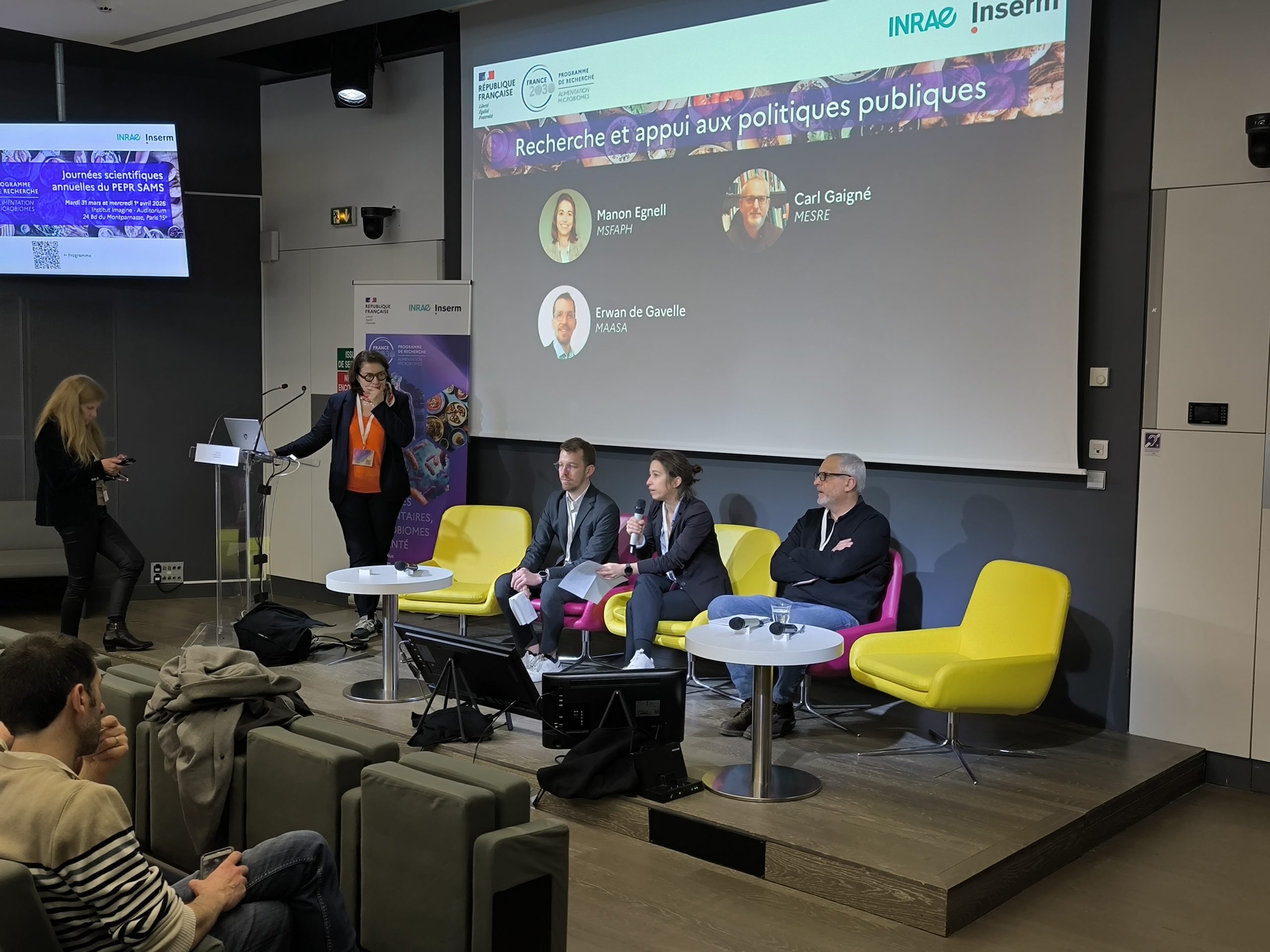
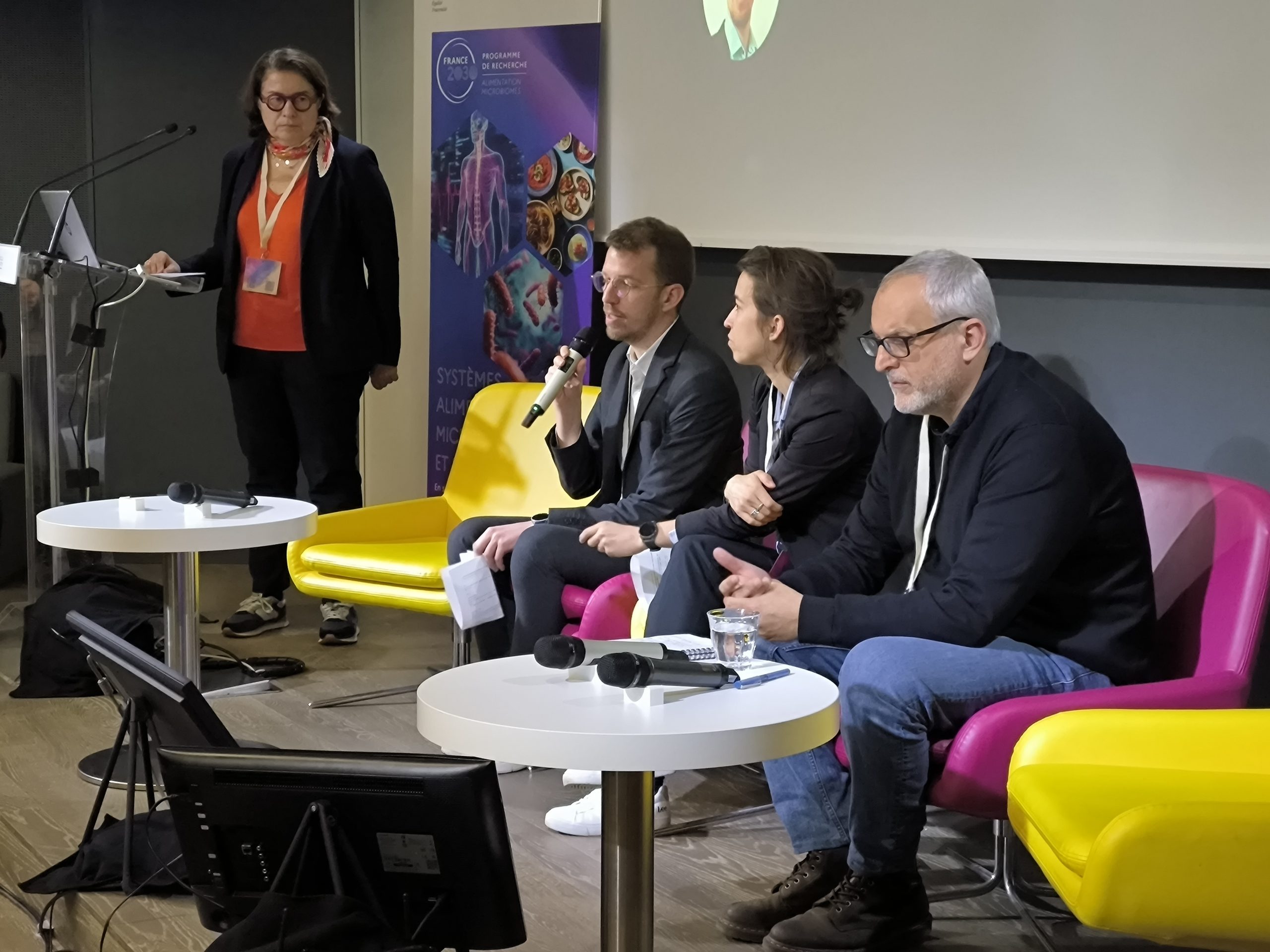
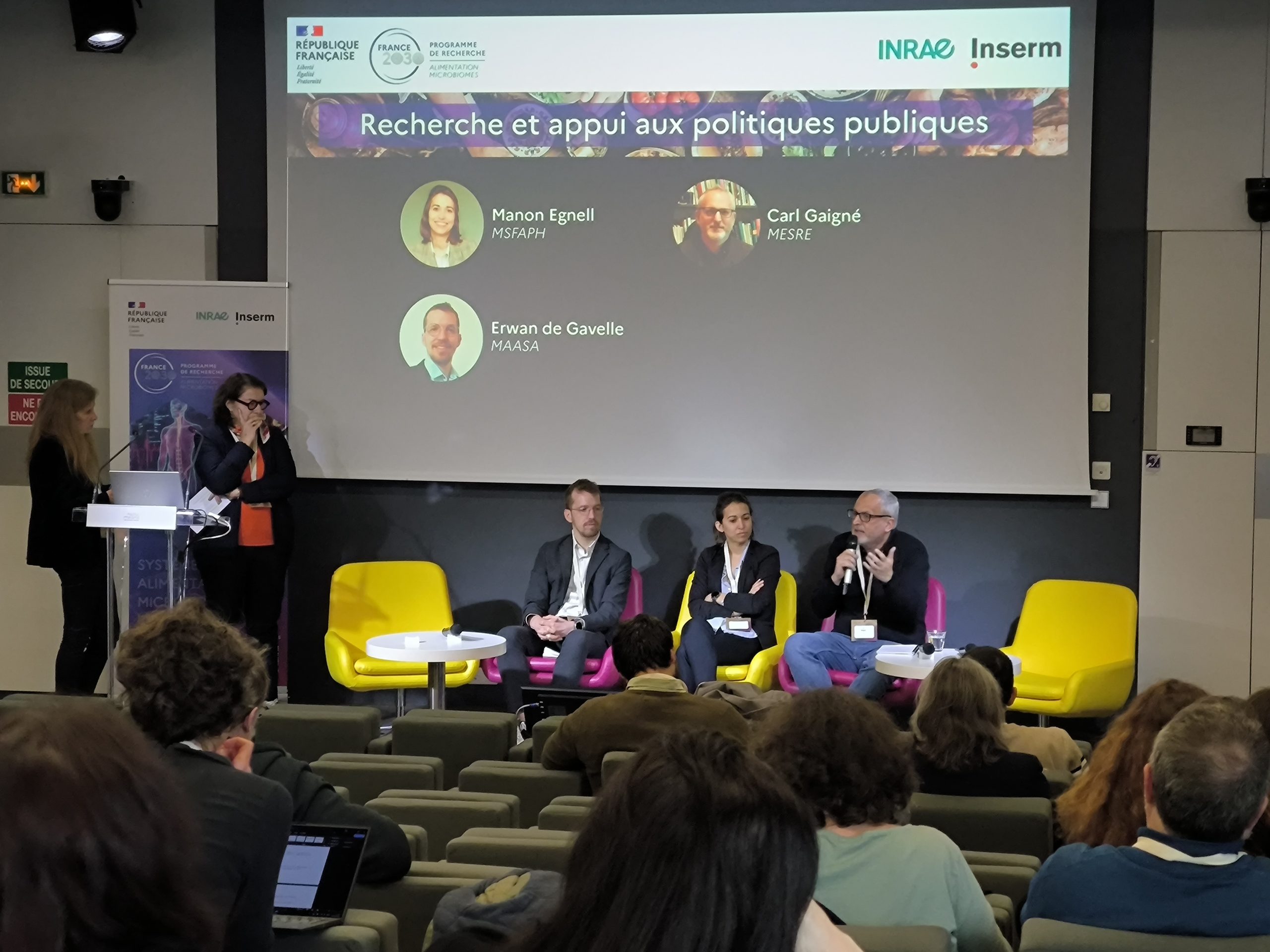
The final half-day began with a discussion on research and support for public policy, attended by three ministry representatives: Manon Egnell from the Ministry of Health, Carl Caigné from the Ministry of Higher Education and Research, and Erwan De Gavelle from the Ministry of Agriculture.
For the third and final “Highlights” session of the SAMS projects, the speakers presented:
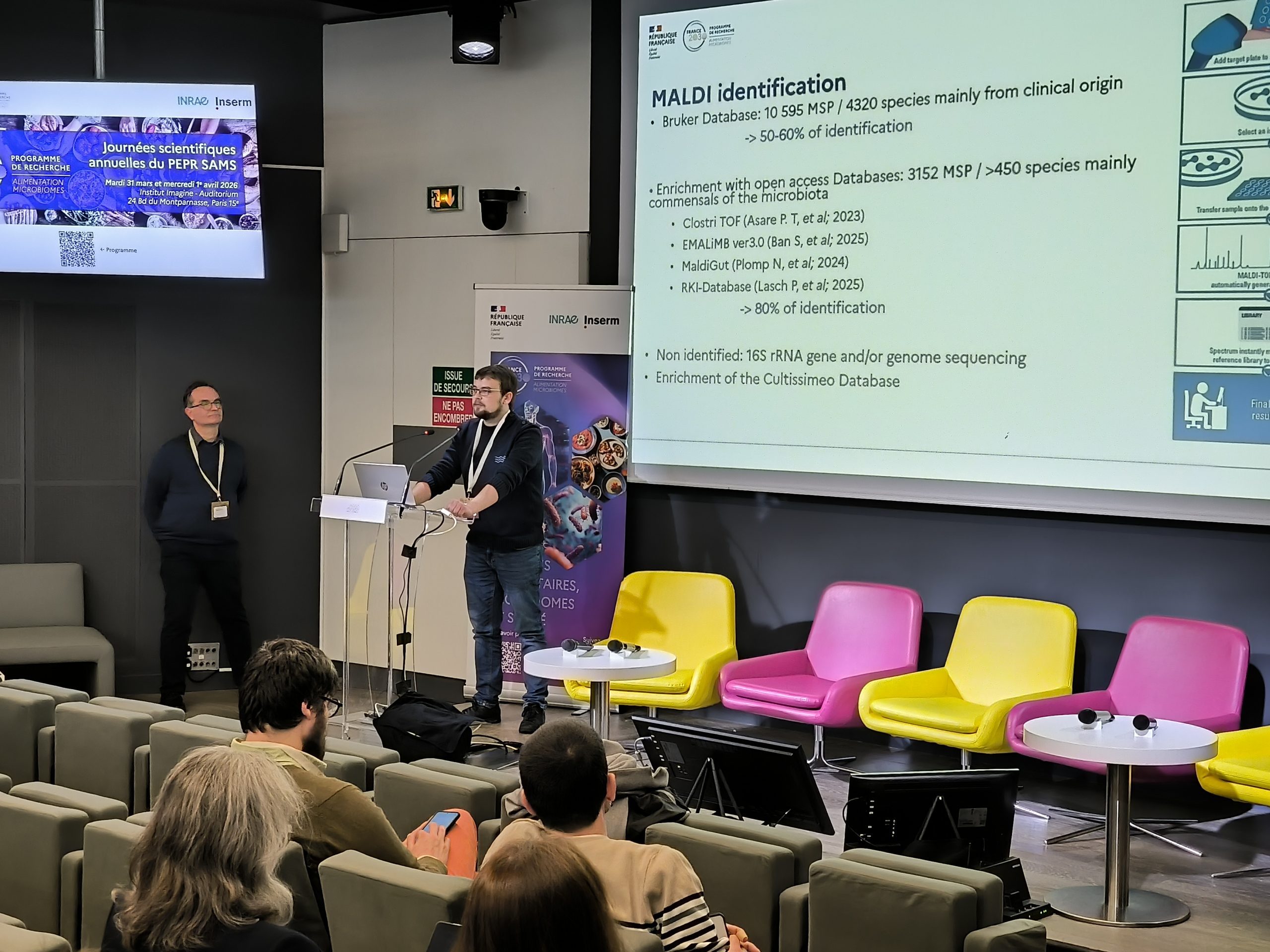
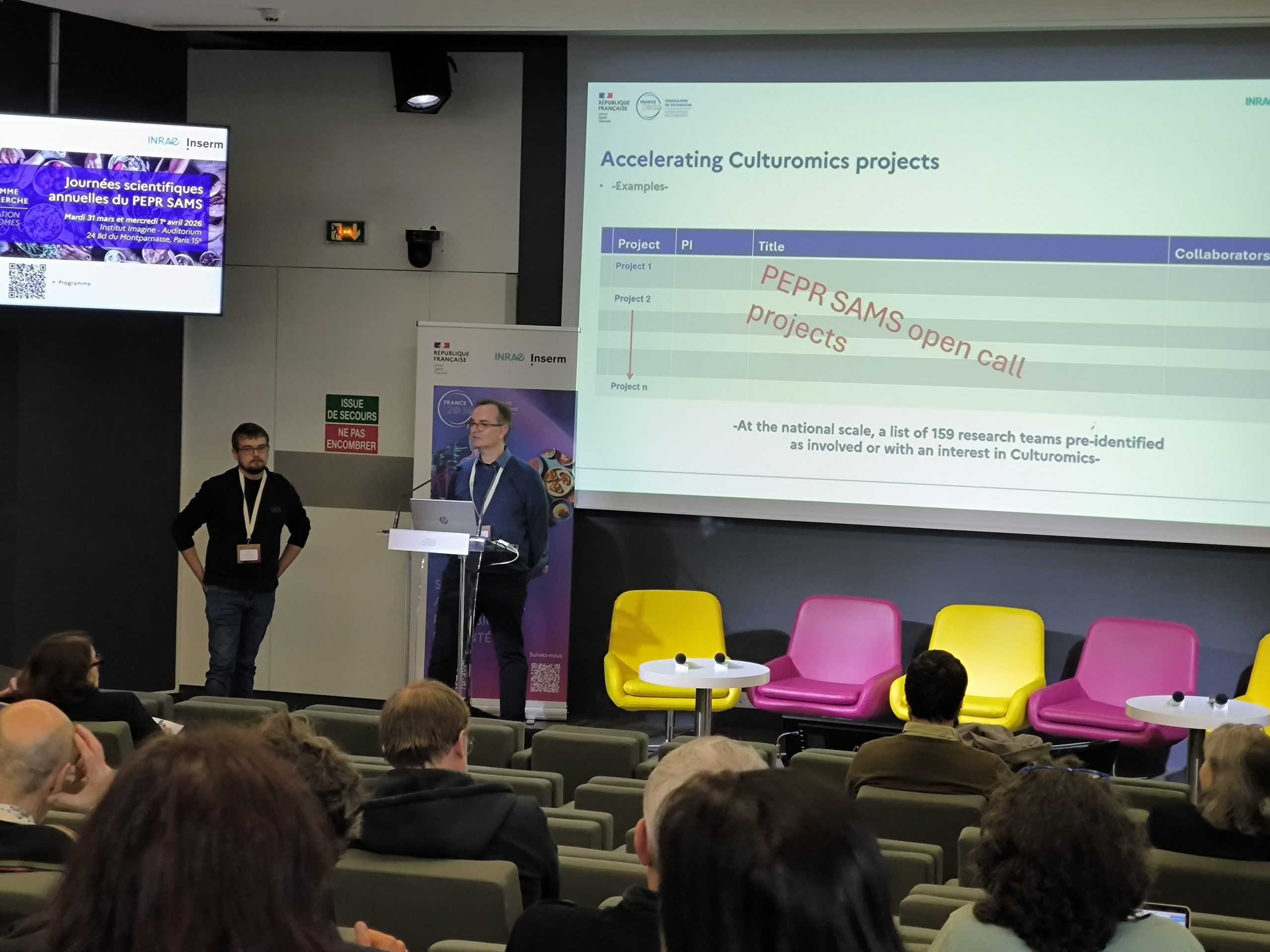
- An analysis of the bacterial “dark matter” in the human microbiome from the Cultissimo project, with Lionel Rigottier-Gois and Alan Jan
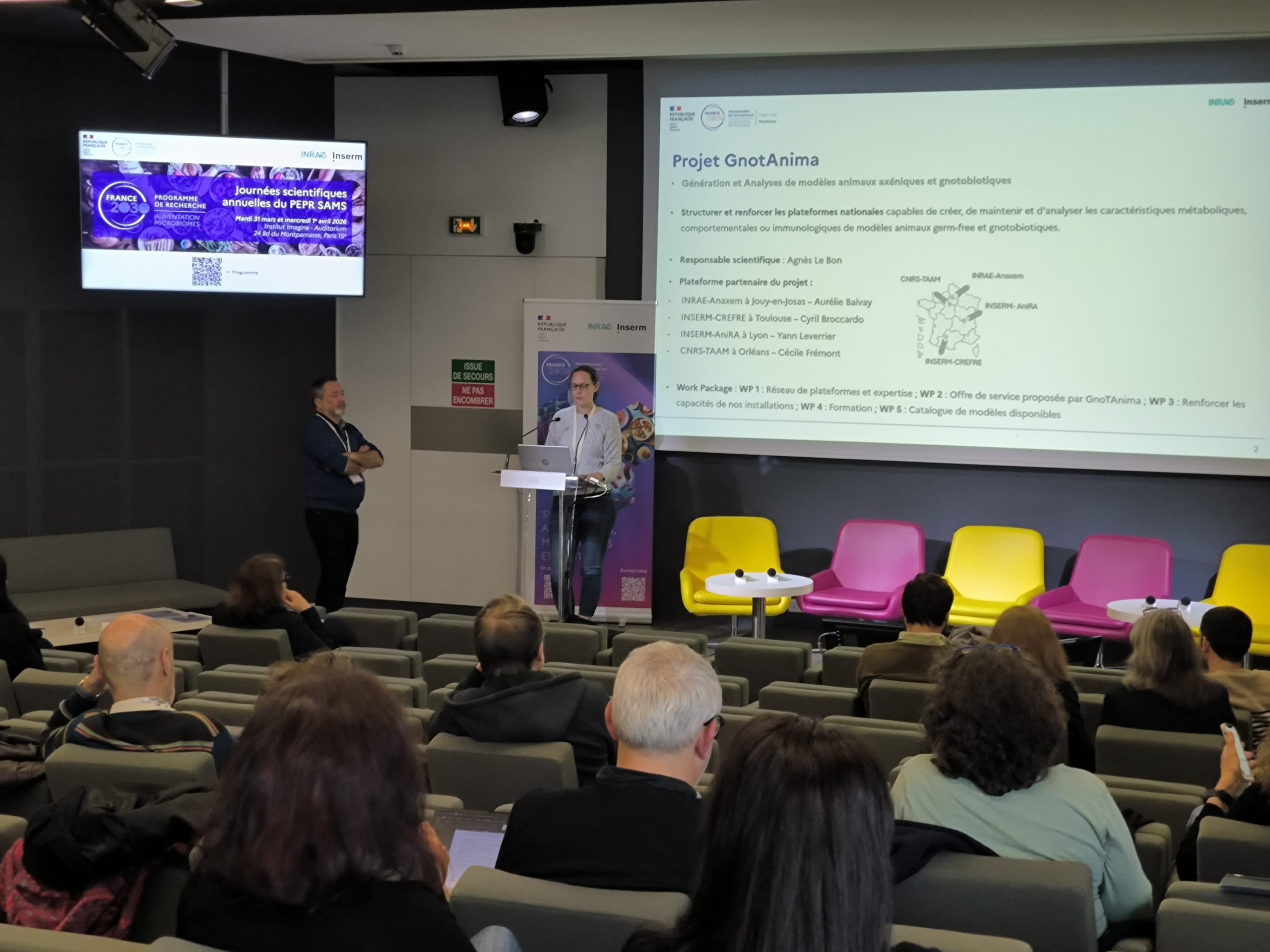
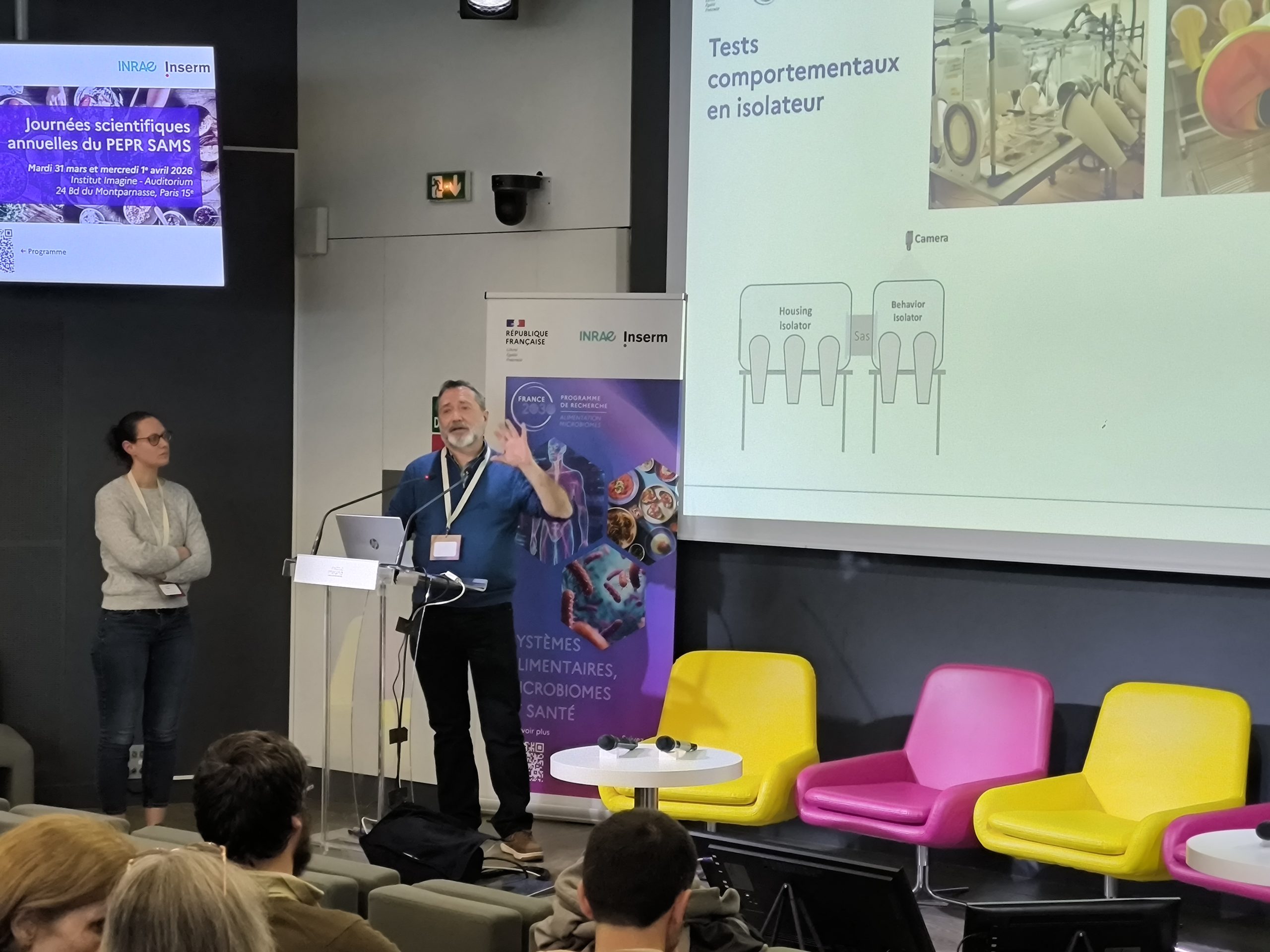
- A study of behavior within the Anaxem platform from the GnotAnima project, with Laurent Naudon and Aurélie Balvay
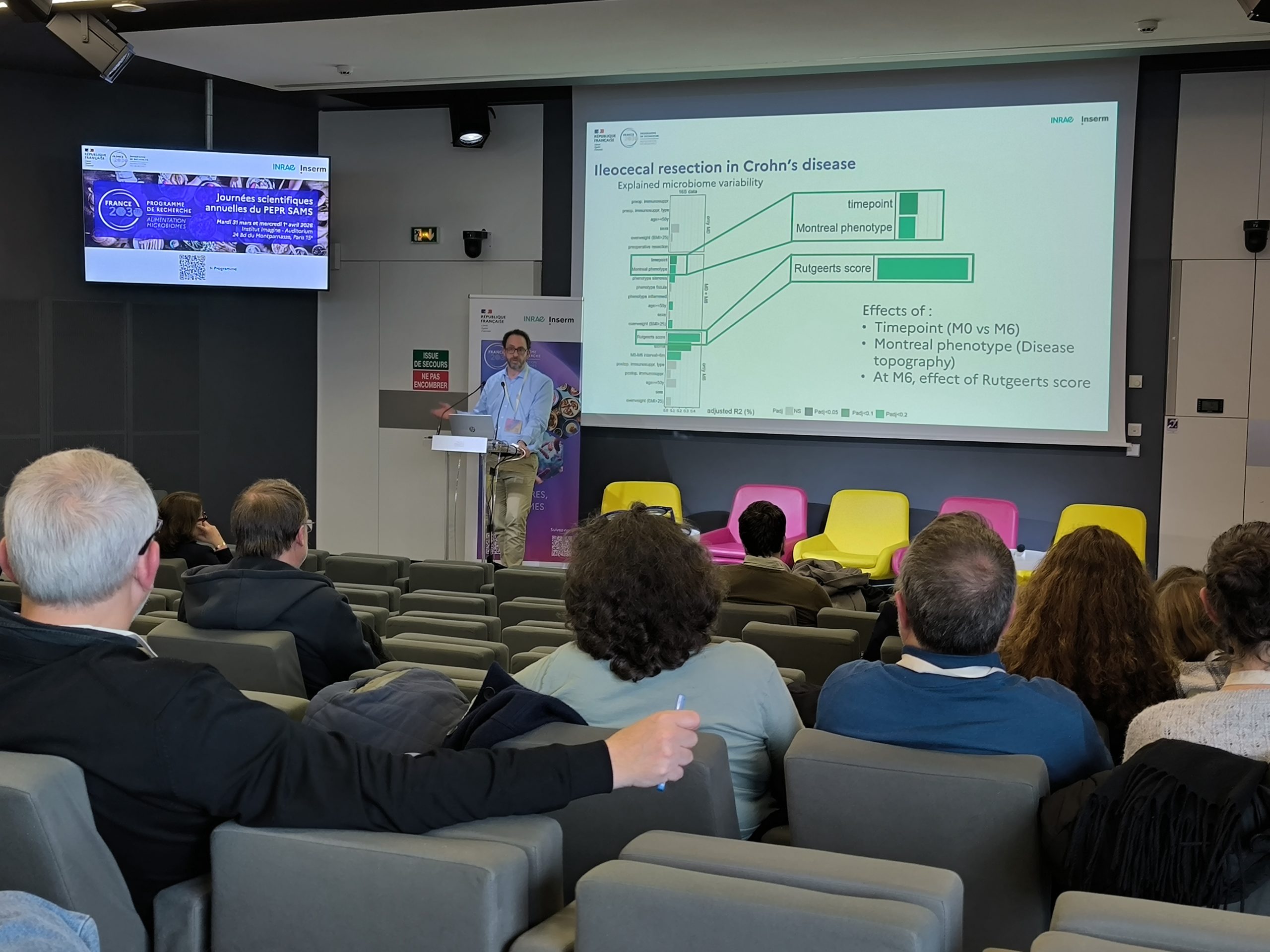
- The publication “Shedding light on the dynamics of the mucosal-associated microbiota in postoperative recurrence of Crohn’s disease” from the SIM-IBD project with Harry Sokol
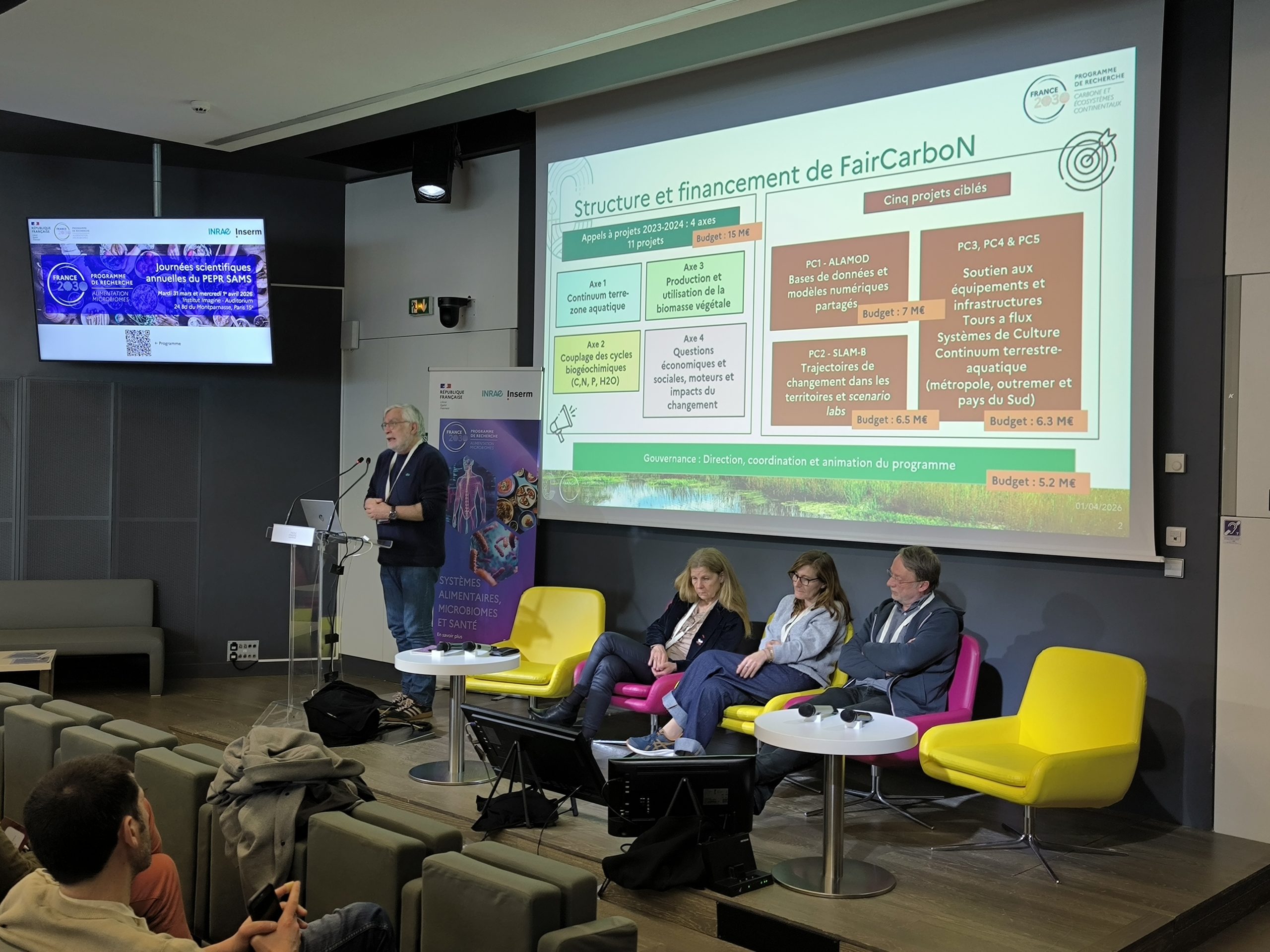
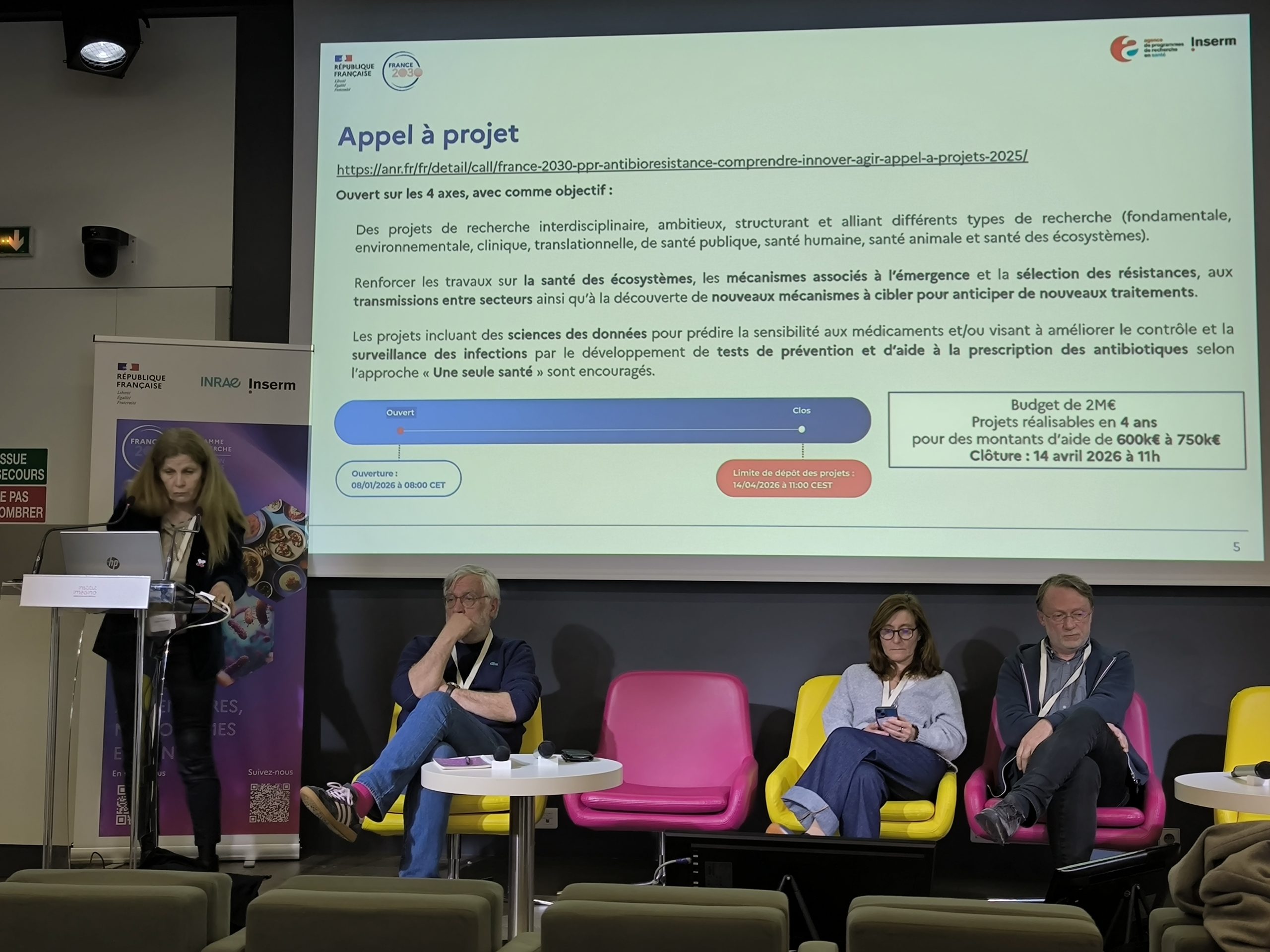
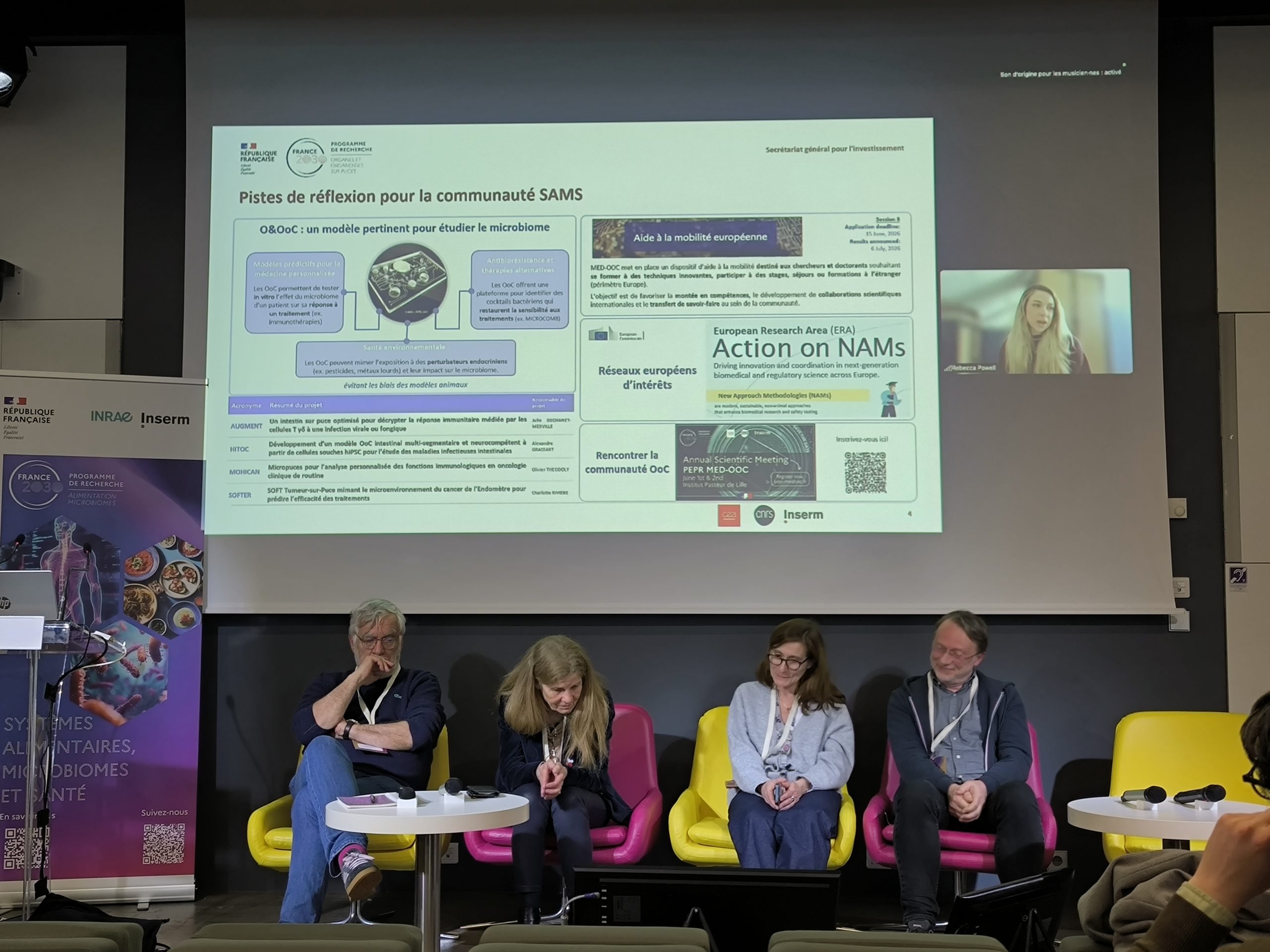
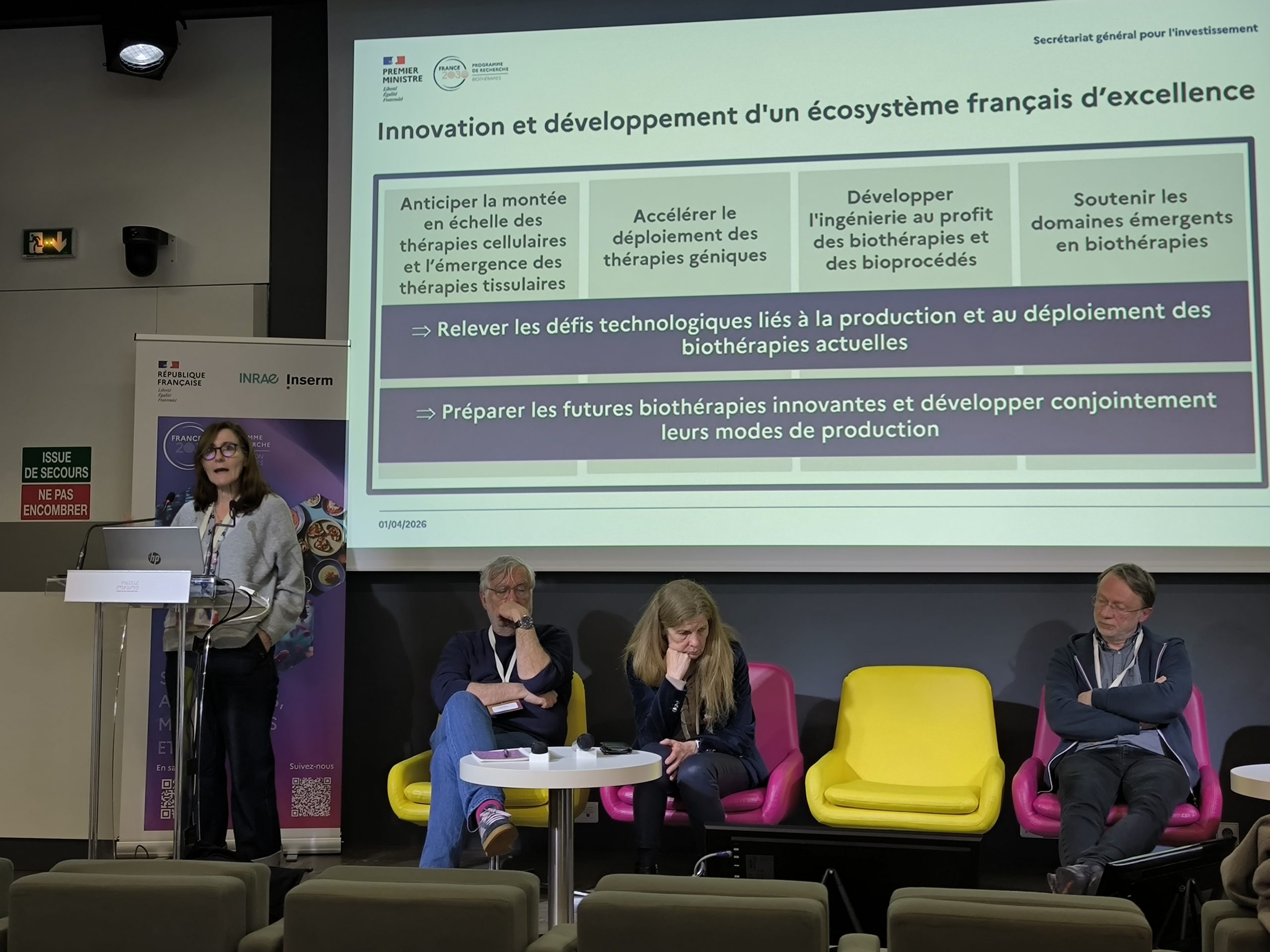
Finally, the annual scientific days of the PEPR SAMS concluded with a presentation on the synergies between the PEPR SAMS and other programs addressing related themes, featuring Hervé Guyomard from the PEPR FairCarboN, Evelyne Jouvin-March from the PPR Antibiorésistance, Rebecca Powell from the PEPR MED-OOC, and Cécile Martinat and Jean-Marc Châtel from the PEPR BBTI.